
Credit Cards at UK Casino Sites: What the Rules Allow
 Available in GB
UK-licensed casinos cannot take credit cards for gambling, so payment methods depend on card type, account checks and operator availability.

Why UK-Licensed Casinos Don’t Take Credit Cards
A UK-licensed casino cannot accept credit-card payments for gambling. The restriction applies even if a site advertises itself as a credit card casino or displays familiar card brands. A UK Gambling Commission licence does not give an operator permission to accept credit cards for bets or casino play; the ban remains in force.
The rule took effect on 14 April 2020 and has not been relaxed. It is intended to prevent people from funding gambling with borrowed money on a credit card. That distinction matters: a card payment may look like an ordinary transaction, but the operator must treat its use for gambling according to the UK rules. A licensed casino cannot decide to make an exception for a particular customer or game.
This can make some online listings confusing. A specialist review may name Visa or Mastercard among a casino’s payment methods, but that does not establish that credit cards are accepted for gambling by UK customers. The card brand alone does not tell you whether the product is credit or debit, nor whether that particular card is eligible. The legal point is straightforward: a UK-licensed casino must not take a credit-card payment for gambling.

Be careful, too, with wording such as “credit card deposits” in a page title or payment banner. It may be inaccurate, out of date, or written for customers in another market. A page can describe a method broadly without confirming that a UK customer can use a credit card to fund play. Treat the operator’s UK terms and the payment information shown for your account as more relevant than a generic claim.
The restriction is about the payment being used for gambling, not about whether the casino calls itself a credit card casino. Nor does a site’s marketing language change the operator’s obligations. UK-licensed remote gambling businesses must follow the rules that apply to their UK customers. A casino cannot make credit-card gambling permissible simply by presenting it as a special deposit option, a promotion, or a feature of a particular account.
If you have searched for UK casinos that accept credit cards, the useful answer is that a UK-licensed casino should not accept one for gambling. A site claiming otherwise deserves careful scrutiny rather than an assumption that the restriction has changed. A payment logo or an old review is not proof that a credit-card deposit is allowed under current UK rules.

This is also why the phrase “credit card casino not on GamStop” should not be treated as evidence that a payment is permitted. The important distinction is whether the operator holds the relevant UK licence and follows its requirements. Any casino serving customers in Great Britain under a UK Gambling Commission licence remains subject to the credit-card restriction. A claim about an operator’s account settings or exclusion arrangements does not override that rule.
When reading payment information, keep the card product in mind. Visa and Mastercard are brands, not a guarantee that every card carrying the logo works in the same way. A debit card and a credit card can display the same brand while being different products. That does not mean you should assume a card will be accepted: the casino’s UK payment information must identify what is available, and the credit-card ban still applies.
If a page appears to offer credit-card gambling at a UK-licensed casino, do not rely on the headline alone. Look for clear information about the UK service and the payment product, and verify that the operator is licensed for the market. A licence is not a general endorsement of every claim made in an advert or third-party review; it is a regulatory requirement that comes with obligations, including not accepting credit cards for gambling.
The rule is not a temporary cashier setting or an optional policy that each casino can choose to follow. It is a continuing restriction on UK-licensed gambling. So, despite the wording used in some listings, there are no UK-licensed casino sites that can lawfully accept credit-card payments for gambling.
Credit Cards and Online Gambling: What the UK Ban Means
You cannot use a credit card to fund gambling with a UK-licensed remote operator. The restriction covers online casino deposits, not just payments made at a physical venue. It applies whether you are playing casino games through a website or an app, and it includes slots.
The key point is the source of the funds, not simply the payment button or account you use. A payment does not become acceptable for gambling because it passes through another service first. If a credit card is used to fund a payment that a remote gambling operator receives for gambling, the operator must not accept it through a money service business. The same applies to a wallet if that wallet permits credit-card funds to be used for gambling.
That distinction matters when a payment service holds or moves money on your behalf. Paying from a wallet is not, by itself, a way around the restriction: the relevant question is whether credit-card funds can be used for gambling through that wallet. If they can, a remote operator cannot accept the wallet payment for gambling. The service’s name or the fact that it is separate from your bank card does not change that rule.
So, if you are asking whether you can deposit at an online casino with a credit card, the answer for a UK-licensed casino is no. Nor can you use a credit card to gamble online by routing the money through an intermediary that falls within the restriction. This is not limited to a particular casino game or to the moment you place a wager. Funding the gambling account with credit-card money is the issue.

It can help to separate the payment source from the way a transaction appears in your account. A wallet balance or an intermediary payment may look different from a card transaction, but appearance alone does not establish that the funds are permitted. Where a wallet allows credit-card funds to be used for gambling, the operator cannot accept that wallet payment. You should not treat an indirect route as a loophole.
The restriction applies to remote gambling, including online casino play, even when the payment is arranged outside the casino’s own cashier. A third-party service cannot make credit-card gambling acceptable simply by processing the transfer before it reaches the operator. If the intended use is gambling and the route uses credit-card funds in a prohibited way, the remote operator must not accept the payment.
This also answers the question of whether you can use a credit card on slots at a UK-licensed online casino: the game does not create an exception. Slots are online gambling, so a credit-card-funded payment cannot be used to fund that play. The same scope applies to other casino games offered remotely.
The rule is about credit-card payments for gambling, including covered indirect routes; it is not a general statement that every payment card is a credit card. But you should not assume that a payment is allowed merely because it is processed by a wallet or another service. The restriction remains in force, and a UK-licensed remote gambling operator cannot accept a payment route that permits credit-card funds to be used for gambling.
Do
- Check the live cashier for eligible payment methods
- Use a payment account that belongs to you
- Ensure your account name matches your payment details
Don't
- Use a credit card to fund gambling deposits
- Route credit-card funds through a wallet or intermediary
- Rely on general lists or logos as proof of acceptance
Top online casinos in the UK
- ChanzeBonus: Slots Welcome Bonus #1 200% up to €500 · Payout speed: 1-3 business days
- BeOnBetBonus: 100% up to €500 + 100 FS · Payout speed: 1-3 business days
- x3betBonus: Welcome Pack 100% Up to £1.000 + 200 Free Spins · Payout speed: 1-3 business days
- JetsetspinsBonus: 200% Bonus + 100 Free Spins + Free Royal Wheel · Payout speed: 1-3 business days
- WinBeastBonus: €5000 + 500 FS + €650 Freebet · Payout speed: 1-3 business days
- NightWinBonus: £900 + 400 free spins · Payout speed: 1-3 business days
- Revery PlayBonus: 100% up to€1,000+ 100 FS · Payout speed: 1-3 business days
- EvoSpinBonus: 125% up to €2500 + 125 Free Spins · Payout speed: 1-3 business days
When the Ban Began—and Why Card Funding Routes Matter
The UK credit-card gambling ban took effect on 14 April 2020. It has not been relaxed. The date matters because the restriction is not a temporary cashier setting or a policy that individual casinos can choose to waive: remote gambling operators serving the British market must follow it.
Changing the route a payment takes does not change where the money came from. A credit card used to fund a money service business cannot be used as a workaround for gambling. The same applies to a wallet if it allows credit-card funds to be used for gambling. Passing money through an intermediary does not make the underlying credit-card funding acceptable.
That distinction can be easy to miss. A cashier may show a wallet or payment service rather than a card, but the name displayed at checkout does not settle whether a payment is permitted. What matters is whether credit-card funds are being used for gambling through that route. The restriction is not avoided simply because the casino does not receive a direct card payment.
This also explains why a payment route can involve checks beyond the initial transaction. Casinos commonly use closed-loop rules, returning funds to the original payment source as an anti-fraud and anti-money-laundering control. If a transaction involves a different route or source, the casino may need additional verification before processing it. That can add friction; it does not make credit-card funding acceptable.

If you are unsure what sits behind a wallet balance, check how it was funded before using it for gambling. A wallet is not automatically suitable just because it is a separate account or appears as a distinct option. Where credit-card funds can be used for gambling through that wallet, the route remains prohibited for a UK-licensed casino.
The practical point is simple: the ban follows the use of credit-card funds, not just the appearance of a card number in the casino cashier. A transfer through another service does not turn those funds into an acceptable gambling payment. The rule has applied since 14 April 2020, and a different route does not change that.
What to Check Before You Deposit
A payment logo on a casino page does not confirm that the method is available to you. A specialist review may list Visa or Mastercard, but the current UK options and eligible card products need to be checked in the casino’s cashier. Availability can depend on the specific product and the operator’s payment setup.
Before entering any details, sign in and open the deposit screen. Check which methods are actually displayed for your account and read any notes beside the card option. If the cashier does not make clear whether a supported card must be debit, contact the operator before proceeding. The brand name alone does not tell you whether your particular card will work.
If you are wondering whether credit cards are allowed at UK online casinos, they are not accepted for gambling deposits at UK-licensed casinos. A Visa or Mastercard logo is not an exception to that rule: it does not mean a credit card can be used. Choose only a payment method and card product the cashier identifies as eligible for your account.
- Verify which payment methods are displayed in your specific cashier
- Confirm if your card is a debit product rather than a credit product
- Check if the chosen method allows for both deposits and withdrawals
- Read the specific bonus terms for your chosen payment method
Do not rely on an old payment list, a search result or a page that describes another customer’s options. Methods can change, and a route shown in general information may not appear when you log in. If the cashier’s wording is unclear, ask the casino to confirm the payment product it accepts before you try a transaction. That simple check can prevent a declined payment and avoid confusion about whether the issue is the card brand or the type of card.
The practical point is to check the live cashier, not infer acceptance from a logo or a general list. For UK customers, card eligibility and credit-card restrictions are separate questions: the cashier can show which supported products are available, but it cannot make credit-card payments for gambling permissible.
How Deposits and Withdrawals Work Without a Credit Card
A deposit and a withdrawal are separate stages, so the time shown for one does not tell you how quickly the other will be completed. With a permitted payment method, funds may reach a casino account promptly; receiving a payout can take longer because the casino must review and process the request before the payment provider or bank completes its part.
A specialist payment review notes that a card deposit can be instant, while a withdrawal may take several business days. Treat that as a possible difference, not a promise about every casino or transaction. The cashier should show the methods available for your account, and the operator’s payment information should explain how payouts are handled. A deposit being credited straight away does not mean a later withdrawal will follow the same path or timing.

When you request a payout, the casino may first check the request internally. Withdrawal processing time therefore includes more than the time taken by the payment service to deliver funds. A specialist gambling review reports that the first payout can take longer when the casino is still completing verification. If KYC documents or other account checks are outstanding, allow for that stage before judging the provider’s delivery speed.
This distinction can matter most when you are making your first withdrawal. A request may not move directly from the casino balance to your bank or payment account: the operator may need to confirm that the account and transaction meet its checks. Keep an eye on the cashier or account messages for a request for information, and respond through the casino’s stated process. The timing can depend on both internal approval and whether your account is fully verified, so a payment estimate is not necessarily a guaranteed arrival date.
The payment route used for a deposit can also affect how a withdrawal is arranged. UK anti-money laundering rules generally mean that payouts should go back to the original payment source. If a payment method is not suitable for receiving a payout, the casino may need to use another route that it supports and may ask for further checks. Do not assume that every method displayed for deposits can also receive withdrawals; confirm this before you rely on it.
Once the casino has approved a payout, the remaining delivery time is separate from its own review. A bank or payment provider may have its own processing stages, and the date a casino marks a request as sent is not necessarily the date the funds appear in your account. If a payout seems delayed, first check whether it is still awaiting casino approval, whether the operator has asked for verification, or whether it has already been released to the payment provider.
For a clearer expectation, read the casino’s withdrawal information before depositing and note any distinction it makes between approval and delivery. If the stated estimate is unclear, ask customer support how the time is counted and whether it applies to a first withdrawal. That gives you a more useful basis for planning than assuming a quick deposit means a quick payout.
Payment Options and Their Availability
If you are looking for a UK casino that takes credit cards, the practical alternative is to compare the payment methods it actually offers. Debit cards, bank payments, prepaid vouchers and e-wallets are among the options you may see, but availability differs between sites. A method’s presence in a general list does not mean it will appear for every customer or work for every transaction.
Debit cards and bank payments
Debit cards are a widely accepted option at UK casinos, including Visa and Mastercard. They are not credit cards: the money comes from funds in your bank account rather than borrowing on a credit facility. Even where a cashier displays a familiar card brand, check that your particular card product is eligible before relying on it.

Open banking and bank transfers can be offered as alternatives to card payments. A specialist review describes these methods as capable of supporting instant deposits and fast withdrawals at many sites, but that is not a promise about every operator or account. Some casinos may offer one bank-payment route but not another, so compare the named options in the cashier rather than assuming that all bank transfers work alike.
PayPal and other e-wallets
PayPal is another option at some casinos. A specialist review notes that it can be excluded from bonus eligibility, so read the promotion’s payment terms before depositing if you intend to claim an offer. Do not assume that using an e-wallet makes a deposit eligible simply because the casino accepts that wallet.
Skrill and Neteller are available at some sites, but a specialist review reports that they are often excluded from promotions. Check the conditions for the specific offer and payment method. E-wallet availability is not universal, and a method listed by one casino may be absent from another’s cashier.
The useful comparison is not just whether a wallet appears on a site’s payment page. Check whether it is available to you and whether the terms attach any bonus restriction to it. These details can affect how useful a method is for your intended deposit, even when the cashier accepts it.
Prepaid vouchers and digital wallets
Paysafecard is a prepaid voucher for deposits only. It may suit someone who wants to fund an account without entering card details at the casino, but it should not be treated as a withdrawal route. If you use a deposit-only method, consider how the casino handles payouts before choosing it.
Debit Cards
Widely accepted options like Visa and Mastercard that use funds directly from your bank account.
E-wallets
Services like PayPal, Skrill, or Neteller, though they may sometimes be excluded from bonuses.
Prepaid Vouchers
Methods such as Paysafecard which are typically for deposits only.
Apple Pay is accepted for deposits at some UK-licensed casinos, though it is not offered everywhere. Its appearance depends on the operator and the customer’s available payment setup. A digital wallet should not be assumed to work at every site simply because it is available on a phone.
Compare the method with the offer
Payment options can differ by casino, and promotional rules can narrow the choice further. Before selecting a method, check the cashier’s current list and read the applicable bonus terms. This is especially important for PayPal, Skrill and Neteller, where a specialist review has noted possible promotion exclusions. For Paysafecard, remember that it is deposit-only.
The right choice depends on what the casino supports for your account and what you need the method to do. Treat branded payment lists as a starting point, not a guarantee of availability or bonus eligibility.
Choosing a Payment Route for a Casino Deposit
A payment method can appear in a casino’s cashier without being suitable for the full journey from deposit to withdrawal. Before choosing it, check whether the same method can receive payouts as well as fund your account. Some options are deposit-only, while others may depend on the casino’s own rules or your account details. If you cannot confirm how withdrawals work, ask the operator before sending money.
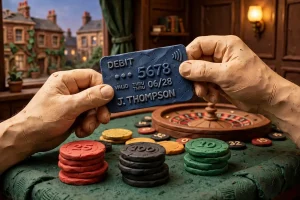
For a UK-licensed casino, a credit card is not a valid route for gambling payments. A site’s claim that it accepts credit-card deposits does not change that restriction. Look instead at the payment methods the casino makes available to you and whether your chosen one supports both directions of payment. A method that accepts a deposit but cannot receive a payout may leave you needing to provide another route later.
Match the payment method to your account
Use a payment account that belongs to you and enter account details that match the information held by the casino. When the account and payment route are in the same customer’s name, basic ownership checks are less likely to create avoidable questions or delays. Do not use another person’s card, bank account or e-wallet, even if that person has agreed.
The clearest arrangement is often one named payment account used consistently for both deposits and withdrawals. Before paying, check that the account name and details are correct, and that the payment method is accepted for the transaction you intend to make. If the casino asks for evidence that you own the account, provide the requested information through its stated verification process.
Using one route consistently does not mean every payout will automatically go back through it. The casino may need to verify your account or confirm which payment method can receive the funds. Follow the cashier’s instructions and contact customer support if the available withdrawal choices do not match the route you used to deposit. Avoid making another deposit just to test a method when you have not established how its payout process works.
Check the full route, not just the deposit button
A payment logo or deposit option alone does not tell you whether withdrawals are supported. Read the payment terms or the cashier’s withdrawal information, and check any conditions attached to the method. If the information is unclear, get confirmation from the operator before proceeding. This is particularly useful when a casino describes a method broadly but does not explain whether it can be used for payouts.
Searches for casinos that take credit cards can lead to offers that do not reflect the rules for UK-licensed gambling. Do not treat an offshore casino’s payment claim as a reason to provide card details. For a UK customer, choose a route the licensed operator permits for gambling and that you can use in your own name.
A little checking before you deposit can prevent a mismatch between the account you fund and the one you later ask to receive a payout. Keep the same personal details across your casino account and payment account, choose a route that supports both transactions, and clarify any uncertainty with the operator first.
Payment Limits, Account Controls and Costs
A casino’s deposit minimum is set by the payment method and the operator, so check the amount shown in the cashier before you decide how much to add. One specialist casino review reports minimum deposits in the £10–£20 range, depending on the method; treat that as an indication from that review, not a fixed rule for every site. The figure displayed for your account is the one that matters.

Maximums can apply to an individual transaction or to deposits across a day or month. They vary with the payment method and your account status, so a limit described elsewhere may not match the one available to you. A specialist casino review notes this variation, but the cashier or account terms are the useful place to confirm the limit that applies to your chosen route.
Payment limits are separate from gambling-spend controls. UK Gambling Commission rules require a remote gambling licensee to prompt you to set a financial limit before your first deposit. You should also be able to find account-level limit controls later, rather than having to rely on the payment method’s own restrictions. These controls can help you set a boundary for your gambling spend; a card or bank limit is not a substitute for them.
Before depositing, take a moment to review the limit displayed by the casino and the financial controls in your account. Check what the selected control covers and how to change it, so you understand the boundary you are setting. If you need to reduce your spending, use the account controls rather than assuming that a payment cap will limit all gambling activity.
Fees are another separate consideration. A deposit limit tells you how much the cashier will accept, not what the transaction may cost. Check the charges shown by the casino and your payment provider for the specific payment, and consider whether currency conversion or other transaction costs apply. A method with a higher deposit cap is not necessarily the less costly choice; compare the terms for the payment you intend to make.
Paying Safely: Ownership Checks and Possible Fees
A payout may be sent back to the payment source used for your deposit. UK anti-money laundering rules generally require casinos to follow this route, which helps them check where funds came from and reduces the risk of money being paid to someone else. It also means a withdrawal may need extra checks if the original source is no longer available or the payment details do not match your casino account.
Use payment details that belong to you and keep the name on your casino account consistent with the name on the payment account. This will not remove every verification step, but it can prevent a basic ownership mismatch from holding up a transaction. If the casino asks for documents during KYC, provide the requested information through its secure account area rather than sending payment details through an unverified channel.
The amount you pay can be affected by more than a casino’s stated fee. A specialist payment review identifies possible charges from the casino, payment provider, card issuer or bank, as well as network costs and currency conversion. Which of these apply depends on the route and transaction, so check the casino’s payment terms and your provider’s own charges before confirming.
Currency conversion deserves particular attention. If your casino balance is not held in pounds sterling, a conversion may apply when money moves in or out. A specialist payment review notes that the exchange-rate spread—the difference between the rate applied and a reference rate—can outweigh a visible flat charge. Check which currency your account uses and what rate will be applied; a payment that appears fee-free may still cost more through conversion.
Before confirming a transaction, review the amount, currency and any displayed charge. If a fee or conversion rate is unclear, ask the casino or payment provider to explain it first. For someone searching for a casino that lets you pay by credit card in the UK, the key safety point is not to treat a card label as proof that a payment is suitable: check the actual payment route and ownership requirements in the cashier.
Playing Slots Without a Credit Card
You cannot fund slot play at a UK-licensed casino with a credit card. The restriction is not limited to table games or other forms of gambling: it applies when you are depositing money to play online slots, too. The regulator introduced the rule on 14 April 2020, and it remains in force.
If you are looking to play slots, you will need to choose another payment method that the casino accepts for your account. Check the cashier before making a deposit, rather than assuming that a card shown on a general payment page will work for every customer or account. A credit card does not become acceptable because it is used to add money to a payment service first.
Use the payment route as it is presented by the casino, and read any conditions attached to it. In particular, do not select a wallet for gambling if it allows credit-card funds to be used for that purpose. The restriction applies to the funding route, not just to the name of the payment method displayed at checkout.
Before confirming a deposit, make sure you understand which account or payment method will be charged and that the casino has accepted it for gambling. If a credit-card payment is rejected, do not keep trying different ways to route the same credit-card funds into your casino balance. Select an eligible alternative instead, and follow the cashier’s instructions.
The rule concerns real-money gambling, not whether a slot game is available to view or play in a non-gambling setting. For a real-money session at a UK-licensed casino, the practical point is straightforward: plan to fund it without a credit card. That keeps your deposit within the payment restrictions that apply to slot play in the UK.
Why must withdrawals return to the deposit method?
UK anti-money-laundering and anti-fraud controls commonly require payouts to go back to the original payment source. Using the same account for deposits and withdrawals can also help avoid ownership-related delays.
Are Visa and Mastercard deposits definitely debit cards?
No. Visa and Mastercard are card brands used for both debit and credit products, so check the card type and the casino’s UK cashier. UK-licensed casinos cannot accept credit-card payments for gambling.
Is Skrill available?
Yes, Skrill is available at some UK-friendly casino sites, though it may not be offered everywhere and can be excluded from promotions.
Can I deposit in GBP?
Yes, GBP is supported, but confirm your account currency before depositing to avoid conversion costs.