
High-RTP Slots in the UK: What RTP Can Tell You
 Available in GB
RTP describes a slot’s theoretical long-run returns, while an individual session can finish well above or below that level.

What RTP Can—and Cannot—Tell You About a Slot
RTP, or return to player, is a theoretical measure of how much a slot is designed to return in prizes over extensive play. It can help describe a game’s long-run behaviour, but it is not a forecast of what you will get back from a particular visit. The distinction matters: a figure attached to a slot cannot tell you whether your next spin will win, or whether a session will end ahead.
Think of RTP as a property of the game’s overall mathematical design, not a balance attached to your account. The calculation concerns a large volume of play across many game outcomes. Your own session is only a small part of that picture. It may produce a return well above or below the theoretical level, and it may finish before the longer-run pattern has any chance to emerge.
That is why a high RTP should not be read as a promise of steady returns. It does not mean that the game will give back a particular amount to you, nor that losses will be followed by a win. Each outcome is uncertain. A slot does not owe you a result because you have played for a while or because earlier spins paid little.
RTP can still be useful when understood within its limits. It offers a way to describe the game’s theoretical return over extended play, rather than a guarantee about a single player’s results. If you are comparing slots, it may be one part of the information to consider, but it cannot settle whether a game will suit your budget or the experience you want. In particular, it says nothing about how your own session will unfold.
A useful way to read the term is to separate three ideas: the game’s theoretical return, the result of an individual spin, and the result of your session. The first is a long-run measure. The second is one uncertain outcome. The third is the combined result of the spins you happen to play. Those outcomes can vary widely from the theoretical measure, especially over a short period.

This is also why the word “return” can be misleading if it sounds like a personal refund. RTP does not mean that a player is entitled to receive a set share of their own stakes back. It describes an expectation across play, not a promise that every player—or every session—will experience that return. Your results could be better or worse, and the figure cannot indicate when any win might occur.
The house edge is the related idea from the opposite perspective: it describes the mathematical advantage built into a game. Where a game has a positive house edge, its mathematical expectation is negative for the player over enough sessions, however gradually losses may occur. This does not mean that every session must end in a loss. It means that favourable short-term results do not change the long-run expectation.
That point is worth holding in mind when a slot appears to be paying often. Frequent wins do not automatically mean that you are ahead overall: a win can be smaller than the stake or than earlier losses. Likewise, a quiet spell does not prove that a larger win is due. The timing of outcomes is not a repayment schedule, and RTP does not provide a reliable way to predict what comes next.
For a real-money session, the practical question is therefore not whether a stated RTP guarantees a good result. It cannot. The more useful question is whether you are comfortable with the uncertainty of losing the money you choose to stake. Set a limit you can afford, and treat any win as uncertain rather than as something the game’s theoretical return owes you.
When you see a slot described as having a high RTP, read that as a claim about long-run design, not as a personal promise. It cannot tell you how much you will win, whether you will win at all, or how long a session needs to last before its results resemble a theoretical measure. Keeping that distinction clear makes RTP easier to understand—and harder to mistake for a guarantee.
Top online casinos in the UK
- ChanzeBonus: Slots Welcome Bonus #1 200% up to €500 · Payout speed: 1-3 business days
- BeOnBetBonus: 100% up to €500 + 100 FS · Payout speed: 1-3 business days
- x3betBonus: Welcome Pack 100% Up to £1.000 + 200 Free Spins · Payout speed: 1-3 business days
- JetsetspinsBonus: 200% Bonus + 100 Free Spins + Free Royal Wheel · Payout speed: 1-3 business days
- WinBeastBonus: €5000 + 500 FS + €650 Freebet · Payout speed: 1-3 business days
- NightWinBonus: £900 + 400 free spins · Payout speed: 1-3 business days
- Revery PlayBonus: 100% up to€1,000+ 100 FS · Payout speed: 1-3 business days
- EvoSpinBonus: 125% up to €2500 + 125 Free Spins · Payout speed: 1-3 business days
Reading RTP Claims Across Online Casino Slots
A page headed “highest RTP slots” can look decisive while leaving the key comparison unclear. Before treating a ranking as useful, look for the details behind each entry: the exact game name, the stated RTP, and a clear explanation of what that figure refers to. If those details are absent, the order of the titles does not tell you which one has the higher return.
The same caution applies to a “top ten” list. A numbered format can make unlike claims appear directly comparable, but numbering alone is not evidence. Check whether every entry is assessed on the same basis and whether the RTP figure is attached to that specific game rather than presented as a broad claim about a provider or a category. If the page gives no basis for the comparison, it is safer to treat the ranking as a starting point for checking, not as a dependable verdict.
Look for a figure attached to the game
A useful RTP claim should be specific enough for you to match it to the title you intend to play. A general statement that a casino offers high-return slots does not establish the RTP of any individual game. Nor does a provider’s name, a prominent position on a page, or a label such as “high RTP” supply the missing comparison.
Read the wording closely. Does it give a figure for a named slot, or does it use broad language that could apply to many games? Does the page explain where the figure comes from, and is the game identified clearly enough to distinguish it from other titles? If those points are unclear, there is no sound way to use that claim to rank one slot above another.

This matters when several pages give different answers to the question of which online slot has the highest RTP. A title repeated across lists may attract attention, but repetition does not, by itself, make the claim reliable. Check the stated figure and its basis rather than assuming that a familiar name must lead.
Treat volatility as a separate comparison
Some lists combine RTP with low volatility, as though the two labels together identify a safer or better choice. They describe different features. A low-volatility label concerns the pattern of returns; it does not demonstrate that the game has a higher RTP. A slot cannot be ranked as the best of both types simply because a page places those phrases beside its name.
If you are comparing games for both characteristics, look for an explicit basis for each claim. Do not let a description of one stand in for evidence of the other. A page that ranks games without showing how it distinguishes the measures gives you little reason to trust the combined order.
Use rankings as claims to check, not answers
When you find a list, note the title and the RTP stated for it, then look for the same game-specific information elsewhere before relying on the comparison. If the figure or the way it is described does not match, pause rather than choosing whichever value supports the ranking you prefer. A confident headline cannot settle a disagreement between claims.
Do
- Check the exact game name and stated RTP
- Look for the game's own explanation of stake settings
- Verify the operator's licence on the Gambling Commission register
Don't
- Treat a high RTP as a promise of steady returns
- Assume a numbered ranking is evidence of value
- Rely on memory of previous betting settings
RTP is not a guarantee of what will happen during your play. Even where a game has a positive house edge, its mathematical expectation is negative over enough sessions, however gradually losses may occur. A high-RTP description therefore cannot turn a ranking into a promise of profit or make a particular session predictable.
The practical test is whether a page lets you inspect the claim rather than asking you to accept its ordering. If it gives only a list of supposed leaders, with no clear game-specific basis, it cannot support a meaningful comparison. Keep the distinction between an advertised label and a substantiated figure in view, especially when a ranking combines RTP with other characteristics.
How Slot Games Apply Bets Across Reels
A stake shown on a slot screen can be easy to misread if you assume it refers to one reel or one part of a game. In a five-reel slot, a bet can be applied across all five reels. That describes where the bet is used; it does not, by itself, tell you how the game presents the total stake or divides it between any betting components.
Before starting a real-money slot, look for the game’s own explanation of its stake settings. Check whether the amount on screen is the full amount for a game cycle or an amount attached to a particular selection, such as a line or reel. Do not infer the answer from the size of the number or from the way another slot displays its controls. Different interfaces can present betting choices differently.
This distinction matters when you compare two games. If one screen shows a total stake and another shows a component of the stake, the same-looking figure may not represent the same amount committed to play. A comparison based only on the displayed number can therefore be misleading. Confirm what the figure covers before you treat it as a like-for-like comparison.
The game’s help panel or rules should explain how its controls work. Open that information before playing, particularly if the screen offers several ways to adjust the bet. Look for wording that identifies the selected stake, any per-line or other component amount, and the total wager for the game cycle. If the explanation remains unclear, do not guess: leave the game until you can understand what the controls mean.
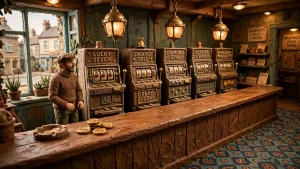
A five-reel layout does not mean that you should automatically multiply the displayed amount by five. Nor does the fact that a bet can cover all five reels establish how the game calculates the stake. The game’s own instructions are the relevant guide. Read them together with the amount displayed immediately before a spin, and check that the amount matches what you intended to stake.
This is a practical check, not a way to identify a slot with a higher return. How a bet is applied across reels describes the game’s staking arrangement. It does not establish the game’s RTP, predict what a particular spin will return, or show that a game is preferable to another. If you are comparing slots, keep the stake setting separate from any claims about returns; they answer different questions.
Take care when changing settings as well. A control may alter the amount wagered, the way the bet is distributed, or another part of the game’s setup. Read the on-screen description after making a change, then verify the total shown before starting the next game cycle. If the interface does not make the effect clear, avoid continuing on the assumption that only one part of the bet has changed.
The same care applies when you return to a game later. Do not rely on memory of a previous setting: check the current display and rules again. A clear understanding of the amount at stake helps you make an informed choice about whether to play, without turning a reel layout or a displayed figure into a claim about value.
Choosing an Online Slot Safely in Great Britain
When you choose an online casino, the operator’s legal status matters before any game detail. The UK Gambling Commission regulates commercial gambling in Great Britain, including remote gambling offered to people there. Its authority applies whether the equipment used to run a service is in Britain or elsewhere. A website’s location, branding or claims about its games do not replace the relevant licence.

A business offering real-money gambling to customers in Great Britain must hold an operating licence from the Gambling Commission. That licence belongs to the business, not to an individual player. The Commission also issues personal licences to individuals who carry out certain operating roles. These are distinct forms of permission: an operating licence authorises a business to provide gambling activities, while a personal licence applies to a person working in a relevant capacity. Seeing a personal licence mentioned does not, on its own, establish that the casino business is licensed.
Before depositing, check the operator’s entry on the Gambling Commission’s public register and confirm that its current operating licence covers the service you intend to use. Match the registered business details with the company named on the casino site. If the names do not line up, or the licence information is difficult to verify, pause rather than treating a logo or a statement on the site as proof. A result for a similarly named company is not confirmation that the casino you are visiting is covered.
This is especially relevant when a casino advertises an online slot as having an exceptional return or presents itself as the best place to play. Such wording is not evidence of regulatory approval. First establish who operates the site and whether that business holds the appropriate licence. Then assess the game information separately; one kind of claim cannot stand in for the other.
A licensed operator must also provide protections that affect how you manage an account. Before a new customer makes a first deposit, the operator must prompt them to set a financial limit and make account-level limit controls accessible. Age must be checked before a customer is allowed to deposit. These are practical checks, not just statements in terms and conditions: look for the controls in the account area and make sure you can find them before putting money in.
UK-licensed casinos cannot accept credit cards for gambling, including credit-card funds routed through a money service business. A wallet that permits credit-card funds to be used for gambling cannot be used for that purpose either. If a payment method appears to offer a route around this restriction, do not assume it is acceptable simply because the casino displays it. The operator should also provide an internal complaints process and access to an approved Alternative Dispute Resolution service if a complaint is not resolved.
You should also be able to find responsible-gambling tools, including self-exclusion. Their presence does not make a game suitable for every person or remove the need to set boundaries, but their absence is a reason to question whether you are dealing with a properly regulated service. Licensed operators are also required to contribute to the Research, Education and Treatment levy; you do not need to assess that contribution yourself, but it is part of the wider regulatory framework.
A careful choice therefore starts with the operator, not a headline about a slot. Confirm the business licence, check that account controls and complaint routes are available, and use only payment methods that comply with the rules. If any of those checks leaves you uncertain, step away until you can establish who is responsible for the site and what protections apply.
What to Check on a Slot Machine’s Pay Structure
A slot’s layout tells you how its symbols can form winning combinations and how the game applies a stake. It does not, by itself, tell you whether the game has a high return to player (RTP). When comparing casino slot machines, separate the visible pay structure from the RTP figure: they describe different things.
Start with the reels. They are the vertical columns on which symbols appear, and a game may require matching symbols along specified routes to form a win. A 5 reel slot game may allow a stake to cover each of its five reels. Check the game rules to see how the stake is allocated and what conditions a combination must meet. A displayed total stake can be easier to interpret once you know what parts of the game it covers.

Next, look at the paylines. These are the routes across the reels that count for winning combinations. The screen may show them as lines, but the rules or paytable explain which symbol patterns qualify and what happens when a line is active. Payline count alone is not a measure of generosity: more available routes do not establish that a game returns a larger share of stakes over time. Nor does a visually busy layout show how often a particular combination will appear.
The paytable is where the game’s symbol values and conditions are set out. Check whether wins depend on matching symbols from a particular reel, whether combinations must follow a displayed line, and whether special symbols have separate rules. If a feature changes what counts as a win, its conditions should also be explained in the game information. Taking a moment to read these details can prevent confusion between a win shown on screen and the amount credited under the game’s rules.
Some slot structures pair multiple paylines with a fixed jackpot and bonus rounds that apply multipliers to accumulated wins. These are design features, not proof of a higher RTP. In particular, a fixed jackpot is different from a progressive pool that grows as play contributes to it; neither label alone tells you the game’s return. A multiplier can affect the value of a qualifying feature, but it does not mean that the feature will occur frequently or that the game is a better choice.
When you inspect a machine, use its information panel rather than judging it from its title, artwork or number of lines. Confirm how many reels and paylines it has, what stake is being applied, and which combinations the paytable recognises. If the game provides an RTP figure, treat that as a separate specification and compare it only on like-for-like terms. The structure helps you understand how play works; it cannot substitute for the game’s return information.
This distinction matters when a slot is presented as one of the highest-return choices. A long payline list, a jackpot label or an elaborate bonus feature may catch your eye, but none answers the RTP question. Read the rules to understand the machine, then assess any RTP claim separately. That gives you a clearer basis for comparing games without mistaking complexity or visual appeal for a measure of return.
How Volatility Changes the Shape of a Slot Session
Volatility describes the pattern of a slot’s returns: how often wins tend to appear and how large they may be. It is useful when you are thinking about the feel of a session, but it does not identify a slot with the highest RTP. These are different measures, so a low-volatility label is not, by itself, evidence of a higher return rate.
A low-volatility game spreads returns across more frequent, smaller wins. That can make play feel steadier, because winning combinations may arrive regularly rather than being concentrated in occasional larger payouts. Across most low-volatility titles, winning combinations typically appear every three to six spins on average. This is a broad pattern, not a schedule: it cannot tell you when your next win will land or whether a particular session will include one.

High-volatility slots tend to pay less often, with wins that can be larger. The gaps between returns may feel more pronounced, and a larger payout is not assured simply because the game is described as high volatility. In either case, the label concerns the distribution of wins, not a promise about what you will receive.
If you are comparing slots described as both high RTP and low volatility, keep those claims separate in your mind. RTP is not a description of how wins are spaced through a session, while volatility does not establish the game’s RTP. A combination of labels cannot guarantee frequent returns, a particular payout size or a favourable result for you.
Consider what kind of session you are comfortable with. If frequent, smaller wins sound less unsettling than longer stretches without a win, low volatility may better match that preference. But those smaller returns can still leave your balance lower overall, and regular combinations should not be mistaken for profit. If the rhythm of a game makes you feel pushed to continue until a larger win appears, stepping away is a sensible choice.
Volatility is therefore best treated as a description of pace and payout pattern, not a ranking. It may help you decide whether a game’s expected rhythm suits you, but it cannot tell you how your own session will unfold.
Understanding Volatility
A low-volatility game spreads returns across more frequent, smaller wins. Across most low-volatility titles, winning combinations typically appear every three to six spins on average. High-volatility slots tend to pay less often, with wins that can be larger.
What the Available Facts Say About Pragmatic Play Slots
Pragmatic Play is a game provider, but its name alone cannot tell you which of its slots has the highest RTP. A provider’s catalogue can include different games, each with its own rules and return settings. To compare specific titles, you need information tied to the game itself, not a general claim about the studio.
That distinction matters when you see a slot described as one of Pragmatic Play’s highest-return games. Treat the label as a claim to check, not as a promise that the game will pay more during your session. RTP is a long-run theoretical measure; it does not predict what will happen in a short run of spins. Even a figure attached to a title would not make a particular result more certain.
Before playing a Pragmatic Play slot, look at the game’s own information screen and the casino’s description of that title. Check that they refer to the same game and the same version. If a page gives a ranking but does not explain where its figures come from, or whether settings can differ, the ranking may not give you a sound basis for choosing. A provider logo or familiar game artwork is not evidence of a particular return.
The same care applies if you are comparing Pragmatic Play with another studio, such as Hacksaw Gaming. Provider names do not establish which individual slot has the higher RTP. Compare clearly stated details for named games rather than treating a studio-wide label as a reliable measure.
You can still use RTP as one part of an informed choice, provided you can confirm the figure for the exact title you intend to play. Keep it separate from other features, such as how often wins occur or how large they may be. Those describe different aspects of a game and do not turn a provider name into a ranking.
If you cannot confirm an RTP figure for the specific Pragmatic Play slot, avoid relying on a list that presents it as a leader. Choosing a game on that basis would mean trusting a label without knowing what it represents.
Why There Is No Verified Single Slot to Name as the Highest
Calling one game the highest-RTP slot requires a like-for-like comparison of stated RTP figures for named games. Without that comparison, a title cannot be singled out responsibly, and a casino’s general reputation is not a substitute for a game-specific figure. A casino may offer many slots; the venue name alone does not tell you which game has the highest RTP.
Treat “highest” as a claim that needs a clear basis, not as a label that settles the question. If a game’s information gives an RTP, read that figure as applying to that game, not as proof that it leads every other slot available in the UK. A list that ranks games should make its comparison clear. If it does not, the order may not tell you anything reliable about which title is highest.
This is separate from what RTP means over time. A stated return does not predict what your next session will pay. Nor does a high-RTP label turn a slot into a dependable way to make money. Every game with a positive house edge has negative mathematical expectation over enough sessions, however gradually losses occur. That long-run property does not identify a particular game as the highest; it is a reason to keep any RTP claim in perspective.
You can still assess a specific title without treating it as a winner. Look for the game’s own RTP information and check that the claim refers to the version you are considering. If you cannot establish that basis, avoid relying on a ranking or headline alone. The useful question is not merely whether a slot is described as high RTP, but what figure is attached to that exact game and what the claim actually compares.
So there is no single title to name here as the UK’s highest-RTP slot. Naming one without a comparable, game-specific basis would turn an uncertain ranking into a confident claim.
Slot RTP and Table-Game Payouts Are Different Comparisons
When comparing casino games, a roulette payout and a slot’s RTP describe different things. A roulette payout tells you what a particular winning bet returns relative to its stake. It does not identify a slot with a higher RTP, and it cannot be compared directly with a slot’s RTP figure.
European-style roulette uses a wheel with pockets numbered from 0 to 36, including the green zero. You choose a position or group of positions on the betting layout before the ball is released. If you stake on a single number and it wins, the straight-up payout is 35:1. Outside bets cover broader groups: low or high, odd or even, and red or black each pay 1:1 when successful.
Those ratios apply to the selected bet when it wins. They are not percentages describing the total return of every wager over time. A straight-up bet and a red-or-black bet also cover different outcomes, so their payout ratios alone do not tell you which choice is better overall. The zero is part of the wheel, too, and affects the chance of an outside bet winning.
Slot RTP, by contrast, is used to express a game’s theoretical return across play rather than the payout for one named winning combination. A roulette table may show its payouts plainly, but that does not make those ratios equivalent to the published RTP of a slot. Treating a 35:1 roulette payout as if it were a slot return figure would mix two different measures.
So if you are looking for a casino game with a high RTP, keep the categories separate. Roulette payout tables can help you understand what a selected winning bet pays; slot RTP figures, where available, are a different kind of comparison. Neither figure guarantees what you will receive in an individual session.
A Final Check Before Treating Any Slot as the Highest RTP
A high RTP label can help describe a slot’s long-run theoretical return, but it cannot tell you what will happen during your session. A run of spins may end with a return, a loss, or a result that bears little resemblance to the figure on the game information screen. Treat the label as context, not as a forecast or a reason to expect your stake back.
The same caution applies when a game is described as the highest RTP slot in the UK. A ranking does not change the way an individual session unfolds, and the label alone is not enough to make one game a suitable choice for you. Check the game information carefully, but do not use a stated return as a target to chase or a promise of a particular outcome.
Over enough sessions, any game with a positive house edge has a negative mathematical expectation for the player. That remains true whether losses build gradually or arrive in a more uneven pattern. A favourable-sounding label cannot remove that underlying risk.
Before you play, decide what you can afford to lose and stop when you reach that limit. If you find yourself increasing your stake to recover losses, pause rather than treating a higher RTP as reassurance.