
Casinos That Accept Tether in the UK: What to Check
 Available in GB
A casino’s general crypto claim is not confirmation: availability, network, costs, limits and withdrawal checks all matter.

What to verify before paying with Tether
A casino’s general claim to support cryptocurrency does not establish that it accepts Tether. The payment method needs to be named clearly, and its availability should be confirmed in the casino’s own cashier before you make a deposit. A banner, review summary or broad “crypto accepted” label may cover several different currencies without telling you which ones are available to your account.
A specialist review of casino payment pages describes sites listing Visa, Mastercard, bank transfer, e-wallets and several cryptocurrencies. That gives a picture of the kinds of methods those pages mention, but it does not confirm that any particular site accepts Tether. Nor does a reference to cryptocurrency tell you whether the option is available to customers in the UK. Treat general wording as a prompt to investigate, not as confirmation that you can use Tether there.
This distinction matters when you are comparing casinos that appear to accept digital assets. A site may use “crypto” as a category, while the cashier presents individual payment choices. Tether may be absent, unavailable to your account, or listed under a name you need to recognise before proceeding. Do not infer acceptance from an image of a coin, a page title or a third-party description. Look for Tether itself in the current payment information shown by the casino.
The word “accepts” also needs to mean something specific to you. A payment option mentioned on an information page is not necessarily active when you sign in. The casino’s available methods can be presented differently across pages, and general promotional wording may not reflect the options offered to each customer. The important point at this stage is not to assume that a site-wide statement guarantees access to Tether for your account.

If you are searching for a Tether casino in the UK, keep the location and the payment claim separate. A site may describe itself as serving British players, while its payment page lists cryptocurrencies without identifying Tether. Conversely, a mention of Tether somewhere on a site does not by itself tell you whether the casino is available to you under the relevant UK rules. Remote gambling licensees selling into the British market must hold a UK Gambling Commission licence. Check that the operator is properly licensed as well as checking the payment information; neither point substitutes for the other.
A search result or review can help you find information, but it may not show the cashier as it appears now. Payment pages can change, and a description written at another time is not a dependable promise of present availability. Treat a third-party list as a lead only. Before you commit funds, sign in to the casino and verify that Tether appears among the options actually offered there. If it is not clearly listed, ask the operator for clarification rather than relying on a broad cryptocurrency label.

Be equally careful with names that look interchangeable but may not be. “Crypto,” “digital currency” and “Tether” are not equally precise descriptions. If the page names other cryptocurrencies but not Tether, that is not evidence that Tether is included. If a cashier uses an abbreviation, make sure it clearly identifies Tether before you select it. Do not proceed on the basis that a familiar logo or a general category must cover the currency you intend to use.
For a UK player, the practical standard is straightforward: confirm Tether by name in the casino’s current payment information, and do not treat a general reference to cryptocurrencies as enough. This avoids turning an uncertain label into a decision to deposit. If the information is unclear, pause until the operator confirms what is available to you.
Top online casinos in the UK
- ChanzeBonus: Slots Welcome Bonus #1 200% up to €500 · Payout speed: 1-3 business days
- BeOnBetBonus: 100% up to €500 + 100 FS · Payout speed: 1-3 business days
- x3betBonus: Welcome Pack 100% Up to £1.000 + 200 Free Spins · Payout speed: 1-3 business days
- JetsetspinsBonus: 200% Bonus + 100 Free Spins + Free Royal Wheel · Payout speed: 1-3 business days
- WinBeastBonus: €5000 + 500 FS + €650 Freebet · Payout speed: 1-3 business days
- NightWinBonus: £900 + 400 free spins · Payout speed: 1-3 business days
- Revery PlayBonus: 100% up to€1,000+ 100 FS · Payout speed: 1-3 business days
- EvoSpinBonus: 125% up to €2500 + 125 Free Spins · Payout speed: 1-3 business days
Check whether the cashier supports your intended payment route
A payment method shown on a casino’s information page is not enough to confirm that you can use it from your account. Options can differ by customer, location or the details of a particular payment product, and a page may not reflect what is available when you are ready to pay. Sign in and check the cashier before making a deposit.
DO
- Sign in to the casino and verify Tether appears in the live payment menu.
- Confirm the specific payment route is available for your account.
- Check the cashier's terms for both deposits and withdrawals.
DON'T
- Rely on a third-party review or a general cryptocurrency label.
- Assume a method shown on an info page is active when you sign in.
- Assume a deposit method is also available for withdrawals.
If you are looking for a Tether online casino in the UK, check for Tether as a named option in the live payment menu. A general reference to cryptocurrency does not tell you which assets the casino accepts, or whether Tether is available to you. Do not treat a logo, an old review or a broad statement about digital currencies as confirmation of a working payment route.
The cashier should make clear which methods are available for your account and what action each supports. Check deposits and withdrawals separately: a method appearing under deposits does not establish that it can also be used to receive a payout. If the cashier does not explain the route clearly, ask the operator before sending funds. Do not rely on an assumption that a payment method will be added or accepted later.
This check matters for card payments too. A specialist review may list Visa or Mastercard, but that does not confirm current UK availability or that your particular card product is eligible. Use the cashier to confirm the options presented for your account. In the UK, credit-card payments for gambling are prohibited, so a card listing should not be read as permission to deposit using a credit card.
Where the cashier offers more than one route, read the labels carefully rather than choosing the nearest-sounding option. Make sure the displayed method matches what you intend to use, and stop if the payment screen asks you to select something different from the route you have verified. A successful-looking deposit flow is not a reason to guess at a payment category or proceed with unclear instructions.
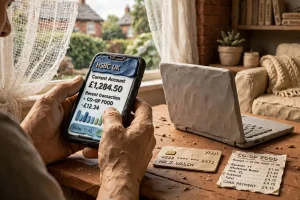
Check the account details shown during the process before confirming. The name and other basic account information should correspond to you, and the payment route should belong to the same customer. When those details do not match, a straightforward transaction can become harder to resolve. If someone else manages the payment account, or you are unsure whose details are attached to it, clarify the position with the operator before paying.
Do not make a small deposit simply to test an option whose availability is unclear. Even a test payment is a real transaction, and it may create questions about how funds can be handled later. First confirm that the casino accepts the route you intend to use, that it is available for your account, and that the cashier’s instructions are consistent from selection through confirmation.
If the option is missing, unavailable or described differently from what you expected, contact customer support and ask for a direct answer about your account. Keep the wording specific: ask whether Tether is currently enabled for your account, whether the payment route shown is the one you mean to use, and whether the cashier supports the action you need. A generic reply that the casino accepts cryptocurrency may not answer those points.
It can also help to check again immediately before paying, even if you saw the option earlier. Payment menus and eligibility can change, so an earlier screen or saved note should not take the place of the current cashier. If the available route no longer appears, pause rather than trying to work around the difference.
For any online casino with Tether, treat the live cashier as the point where your intended route must be confirmed—not as a reason to infer details that are not displayed. A clear match between the method you plan to use and the option presented for your account gives you a firmer basis for deciding whether to proceed. If that match is not clear, wait for the operator to explain it before you send money.
How to assess a casino site when no verified Tether list is available
A page describing a casino as crypto-friendly does not establish that you can deposit with Tether. Treat claims about Tether casino sites as a starting point for checking, not as confirmation that the option is available to UK customers. Payment arrangements can change, and an advertised method may not appear for every account or at every stage.
Assess the site using details you can confirm before you commit funds. First, check the casino’s current payment information, then sign in and inspect the cashier if you have an account. Look for Tether by name and make sure the option is presented for your account, rather than relying on a general list of cryptocurrencies or an old review. If it is not displayed, ask the operator through its support channel whether it is currently available to UK customers. Do not send funds to a wallet address supplied outside the casino’s stated payment process.

Next, establish how a withdrawal would work. A deposit option alone does not tell you whether the same route is available for payouts, or what alternative route the casino may require. Read the cashier information and the payment terms for the route assigned to your account. If those details do not explain the withdrawal path, ask before depositing. You should be able to understand what method a withdrawal would use and whether the casino describes any conditions for returning funds. This is part of assessing the site, not an assurance that a particular Tether withdrawal route is supported.
Check the account currency separately. A specialist review of casino payment information reported GBP as supported, but that does not settle the currency setting for your own account. Confirm the currency shown in the cashier or account settings before your first transaction. If the account is set to a different currency, a payment may involve conversion. Do not assume that seeing a pound symbol elsewhere on the site means your balance will be held in pounds.
The site’s legal status is another basic assessment point for a UK player. Remote gambling licensees offering gambling to customers in Great Britain must hold the relevant UK Gambling Commission licence. Check the operator on the Commission’s public register and make sure the licence details correspond to the site you intend to use. A label such as “non-GamStop” is not a substitute for checking the licence, and it should not be treated as proof that a site is appropriate for UK customers.
Keep the checks separate. A casino might offer Tether to some customers but not others; a page listing Bitcoin or other cryptocurrencies does not prove that Tether is included. Likewise, the presence of Tether in a cashier would not by itself establish the withdrawal route or account currency. Confirm each point in the account information or directly with the operator, and save the terms you relied on in case you need to refer back to them.
Searches for the best Tether casino sites UK can lead to comparison pages that present broad claims without showing what is available in the cashier. Avoid choosing a site on a ranking alone. The same applies if a page promotes Tether slots or casino bonuses: game selection and promotions are separate from whether your intended payment method is available. Check the relevant terms rather than assuming that a payment option carries through to every part of the account.
A careful assessment does not require a shortlist. It requires enough clear, current information to make a decision before you deposit: whether Tether is actually offered to you, how a withdrawal would be handled, what currency your account uses, and whether the operator holds the required UK licence. If any of those points remains unclear, pause and seek an answer from the operator rather than treating an uncertain claim as confirmation.
Compare the full cost before choosing a payment route
A payment option with no visible charge is not necessarily the cheapest overall. The total can include a casino fee, a payment-provider charge, an issuer or bank fee, a currency-conversion spread and, for a crypto transfer, a network fee. Which of these applies depends on the route and the transaction, so do not assume that a route advertised as free has no cost attached.
A specialist payment review identifies these as possible points where charges can arise; it does not establish that every casino or payment method applies each one. Check the cashier’s stated terms, then look at the fees shown by your own provider or financial institution. If the charge is not clear before you confirm a payment, ask the provider or casino rather than treating silence as confirmation that it is zero.

For a Tether payment, compare the amount you intend to send with the value credited to your casino balance. If either side converts the funds into another currency, the exchange rate may include a spread: the difference between the rate used for your transaction and a reference rate. That cost may not appear as a separate fee. A specialist payment review notes that a conversion spread can exceed a visible flat charge, so comparing only the listed fee can give you the wrong picture.
Make the comparison for the actual amount and route you plan to use. A flat charge has a different effect on a small transfer than on a larger one, while a percentage-based or exchange-rate cost changes with the value exchanged. Check whether the casino, provider, bank or issuer adds a charge, and whether the transaction involves a currency conversion or a network cost. Do not rely on a comparison made for a different amount or route.
It can also help to separate the cost of sending funds from the cost of moving them back out. A route that looks inexpensive at the deposit stage may have different charges elsewhere in the transaction. Review the terms for both directions before deciding what the payment will cost overall. Do not assume that a fee shown at one stage covers every service involved.
There is no single payment method that can be called the lowest-cost choice for every player. The result depends on the charges applied to your transaction, the provider’s terms, the currencies involved and any network cost. Compare those elements side by side before confirming a payment. If the final amount you will receive is not displayed clearly, pause and obtain that information first; a small, visible fee is easier to assess than a total that hides its cost in the exchange rate.
Deposits, withdrawals and the limits to check
Before sending Tether to a casino, make sure you know the smallest amount it will accept and whether your intended deposit fits within the limits on your account. A payment can be available in the cashier yet still be unsuitable if its minimum is higher than you planned to deposit. Do not assume that limits shown for cards or bank transfers also apply to a cryptocurrency route.
A specialist review of casino payment terms reports minimum deposits in the £10–£20 range, with the amount depending on the selected method. Treat that as a guide to what the review found, not as a Tether-specific threshold or a promise that a particular cashier will accept that amount. Check the live deposit screen and the terms for the payment option you intend to use; the amount displayed for your account is the one to rely on.

The upper end deserves the same attention. A specialist review also notes that maximum deposits can differ by payment method and account status. Limits may be set for a single transaction as well as across a day or month, so check each applicable cap rather than looking only at the per-payment maximum. If the cashier shows a lower permitted amount than you expected, pause and confirm the limit with the operator before attempting to work around it by splitting a deposit.
Keep deposits and withdrawals separate in your planning. A displayed deposit maximum does not tell you what amount can later be paid out, or whether a withdrawal has a separate cap. Read the payment information for both directions and look for any stated transaction limits before committing funds. If the withdrawal information is unclear, ask the operator to explain the applicable limit in writing; do not infer it from the deposit screen.
There is also an account-level control to consider before paying in. Remote gambling licensees must ask new customers to set a financial limit before they make their first deposit, and must make account limit controls accessible afterwards. Choose an amount that reflects what you can afford to lose, and check where you can review or change the control in your account. A payment maximum is not a personal spending target: the casino’s cap and the limit you set for yourself serve different purposes.
These checks matter whether you are considering a UK Tether casino or comparing other payment routes. The label “best” does not establish that a method’s minimum, maximum or account controls suit you, and a site’s general payment information may not reflect the options available to your account. Confirm the figures shown for your own cashier before proceeding, and do not deposit until the permitted amount and your own spending limit are clear.
- Check the minimum deposit amount for Tether.
- Verify the maximum deposit limits for your account.
- Confirm the payout route is available for your account.
- Set a personal financial limit before your first deposit.
Keep payment ownership details consistent
When considering a casino with Tether, check that the account and the payment route are in your own name and belong to you. A casino may need to establish who supplied the funds before processing a withdrawal. If the deposit appears to come from another person, or the account details do not match, the operator may need to make further checks.
UK anti-money laundering controls generally require a payout to go back to the original payment source. This helps operators check the flow of funds and reduce fraud. It also means that an alternative withdrawal route should not be assumed to be available simply because it is convenient. If you want to deposit using Tether and later request Tether casino withdrawals, confirm how the casino handles ownership and returns before sending funds. Do not infer that a particular Tether casino site accepts this route or permits a different destination for a payout.
A consistent route is often the clearest arrangement: use one account in your own name for the deposit and, where the operator supports it, the withdrawal. Keep the account details accurate and avoid using a friend’s wallet, exchange account or casino account. Even if you have permission to use someone else’s payment method, that does not necessarily satisfy the operator’s checks.
If the original route cannot receive a return payment, contact the casino before depositing rather than choosing a replacement route after the fact. Returning funds to another source may call for additional verification, and the operator may ask you to establish that the alternative account also belongs to you. Follow the casino’s instructions and provide only the information requested through its official channels.

The same care applies when comparing a Tether casino site in the UK with other options. A page that mentions USDT does not explain whose wallet must be used, whether withdrawals can go back to that wallet, or what happens if the original route is unavailable. Treat those as separate ownership questions, not as details to settle after a deposit.
Before proceeding, check that the casino account is yours, that the payment account or wallet is under your control, and that the operator’s return-of-funds process is clear. Matching those details can reduce avoidable friction if the casino needs to verify a transaction.
Understand the possible costs of crypto payments
If you are considering Tether for a casino payment, do not assume that the amount shown before sending is the only cost. A specialist review identifies several possible points where charges can arise: the casino, a payment provider, an issuer or bank, currency conversion, and the crypto network. Which of these applies depends on the route offered and the terms shown for your transaction; none should be treated as a confirmed Tether charge without checking.
A casino might display a payment fee separately, while a provider or bank could apply its own charge outside the cashier. A network fee may also be involved in moving crypto. These costs can be handled by different services, so seeing no fee on one screen does not establish that the whole payment is free. Check the transaction details available to you and any relevant provider terms before confirming.
Understanding Costs
Costs can arise from the casino, the provider, your bank, or via currency conversion and network fees. Even if no fee is visible, a conversion spread may be applied to the exchange rate.
Conversion deserves particular attention when the casino account and the funds you send are valued in different currencies. The amount credited may reflect an exchange rate that is less favourable than the rate you expect. A specialist review notes that this spread can cost more than a visible flat fee. That does not establish what rate any particular casino or provider will use, so look for the rate and credited amount before you approve the transfer. If the information is not clear, pause and ask the relevant service how the conversion is calculated.
The same check matters when withdrawing. The amount you receive can be affected by conversion or charges along the route, even if the casino does not show a withdrawal fee. Do not assume that a deposit and a payout follow identical pricing, or that a displayed balance is the amount that will arrive in your account or wallet.
For a Tether payment, keep a simple record of the amount sent, any fee shown, the amount credited, and the rate used if a conversion appears. This makes it easier to identify where a difference arose without attributing it automatically to the casino. Fees and rates can change, so rely on the terms displayed for the transaction you are making rather than a general claim about crypto payments.
Confirm the network before sending Tether
Tether can be associated with different blockchain networks, so seeing “USDT” in a payment menu is not enough to identify the route for a transfer. Before sending, check the network named in the casino’s payment instructions and make sure your wallet lets you send Tether on that same network. The network selection must match at both ends; a matching token name alone does not confirm compatibility.

This matters if you are looking for a Tether TRC20 casino or an option described as ERC20 Tether. TRC20 and ERC20 are network labels, not interchangeable descriptions of the same route. A casino may support one route, another, or neither. Do not assume that a site accepting cryptocurrency supports TRC20, ERC20 or USDT on a particular network unless its current instructions say so.
Check the full payment details shown for your account immediately before making a transfer. If the casino specifies a network, compare that wording with the network selected in your wallet. Do not rely on an old screenshot, a general cryptocurrency page, or a label copied from another site. Payment instructions can differ between operators and may change, so the route shown for your own transaction is the relevant one.
If the network is not stated clearly, pause and ask the casino’s support team to confirm which Tether route is accepted for deposits. Do not choose a network by guessing, or send a small test transfer unless the operator’s instructions specifically support that approach. A transfer made through an incompatible route may not arrive in the casino account, and recovery may not be possible.
Before confirming, read the wallet’s final transaction screen as well as the casino’s instructions. Check that the selected asset is Tether, that the network matches exactly, and that the destination details have been copied as provided. If any part of the route remains uncertain, do not send the funds until it has been clarified.
Check bonus terms separately from payment acceptance
A cashier showing Tether as a deposit option does not establish that a payment made with it will qualify for a promotion. The payment method and the bonus rules are separate checks. Before accepting a welcome offer or making a deposit, open the current terms and look for an explicit statement about Tether or USDT.
Check the promotion’s eligible payment methods, not only its headline. A deposit bonus may exclude particular routes, or its terms may require you to select the offer before paying. If Tether is not clearly included, ask the operator for clarification before depositing; do not assume that acceptance at the cashier means the deposit will be counted.
Read the conditions attached to the offer as well. These can explain how qualifying deposits are treated, what wagering requirements apply, which games contribute, and whether a bonus or winnings are subject to withdrawal conditions. The exact terms can differ between promotions, so an old review or a previous offer is not a reliable guide to the one currently displayed in your account.

A no-deposit promotion is a separate offer, not evidence that a Tether deposit is eligible. Check whether the promotion is available to you, how it is claimed, and what restrictions apply before relying on it. Do not treat wording such as “welcome bonus” as a promise that every new customer or every payment method qualifies.
If you are looking for an anonymous Tether casino bonus, do not assume that using cryptocurrency removes account checks. Remote gambling operators must verify a customer’s age before allowing a deposit, and the offer may have its own eligibility conditions. A bonus cannot be used to bypass those requirements.
Keep a copy of the current promotion terms or note where they appear before you opt in. If the rules do not name Tether, or the answer from support is unclear, it is safer to proceed without counting on the bonus. Decide whether the payment makes sense on its own, with no promotional value assumed.

What verification can mean for a Tether withdrawal
A Tether payment does not, by itself, mean a withdrawal will be released without account checks. Claims that a casino offers “no KYC” or no verification should not be treated as a promise that a payout will bypass review. For a UK player, the relevant question is what the operator requires to approve your account and withdrawal.
Withdrawal processing has more than one stage. A specialist review notes that the casino’s internal approval process forms part of the wait, and that a first withdrawal may take longer while verification is completed. A separate specialist review also links withdrawal speed to both internal approval and whether the account is fully verified. These points describe possible influences, not a set processing time for every casino.
Before depositing, read the operator’s terms for its verification process and check whether any account checks remain outstanding. If a request arrives after you submit a withdrawal, follow the operator’s instructions and use its stated support route if anything is unclear. Do not assume that choosing USDT removes the need for checks or makes approval automatic.
UK rules also matter: remote gambling operators serving the British market must hold a Gambling Commission licence, and operators must verify a customer’s age before allowing a deposit. That requirement is separate from the checks that may be needed to approve a withdrawal. A label such as “no KYC” does not override the operator’s obligations or confirm how it will handle your account.
Keep the terms and any messages about your account available so you can refer to the stated requirements if a payout is delayed. If the operator has not explained what remains to be completed, ask for clarification before sending further funds. Treat any advertised withdrawal timing as distinct from the time needed for internal approval and account verification. A clear understanding of those stages is more useful than relying on a blanket claim that a Tether casino pays without checks.
Do UK casino withdrawals require verification?
Yes, verification may be completed before a withdrawal is approved, particularly for a first withdrawal.
Why must withdrawals return to the deposit method?
Returning funds to the original payment source is a common anti-fraud and anti-money-laundering control. An alternative route may require extra verification.
Why can a fast payout casino still delay my withdrawal?
A casino must process and approve the withdrawal, and an account that is not fully verified can take longer. First withdrawals may be delayed while verification is completed.
Is Skrill available?
Yes, Skrill is available at some UK-friendly casino sites and remains a common deposit method. It may be excluded from promotions.