Crypto Bingo Not on GamStop
Best Non GamStop Casino UK 2026
Loading...
Bingo Meets the Blockchain
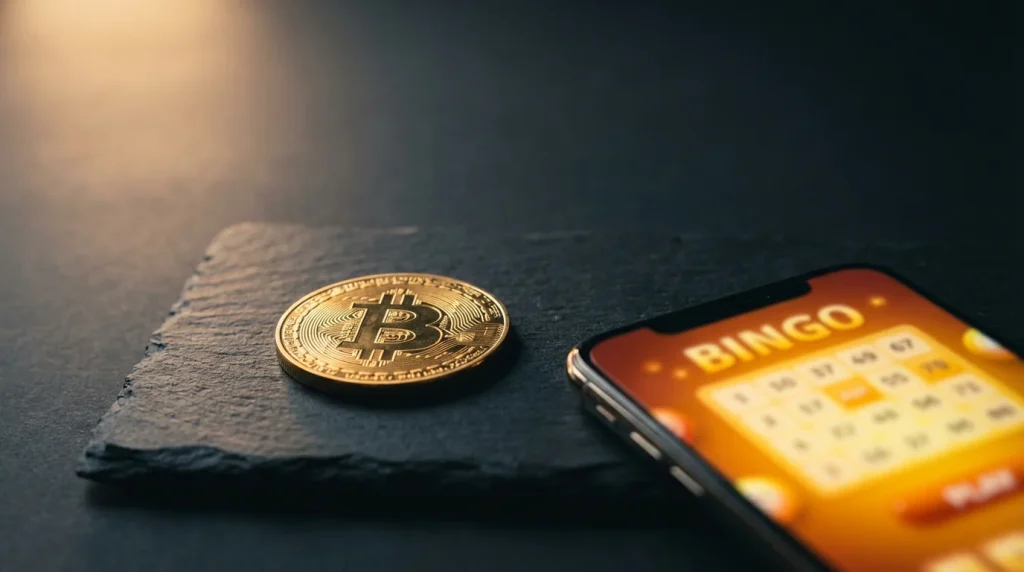
Cryptocurrency and offshore bingo found each other out of mutual convenience. Non-GamStop platforms need payment methods that bypass traditional banking restrictions. Crypto delivers exactly that — transactions that don’t require bank approval, can’t be blocked by card issuers, and settle in minutes rather than days. For UK players, crypto deposits mean no declined transactions, no cash advance fees, and no gambling activity appearing on bank statements. The anonymity and speed suit the offshore model perfectly.
The overlap between crypto holders and offshore bingo players is narrower than the overlap between crypto and online casinos, but it’s growing. As more offshore bingo sites add cryptocurrency to their cashier options, the barrier to entry has dropped. You no longer need deep blockchain knowledge to deposit with Bitcoin or Ethereum — the process at most sites is now as simple as scanning a QR code or copying a wallet address. The technical friction that once limited crypto gambling to early adopters has been smoothed out by better interfaces and more processor integrations.
That said, crypto introduces its own set of complexities. Transaction irreversibility, price volatility, wallet security, and the absence of chargeback protection all apply to bingo deposits just as they apply to any other crypto transaction. The convenience is real. So are the risks. The sections below explain what’s supported, how deposits work in practice, and what you should understand about privacy and permanence before sending coins to an offshore bingo site.
Supported Coins and Networks
Bitcoin remains the most widely accepted cryptocurrency at non-GamStop bingo sites, supported by virtually every platform that offers crypto deposits. It’s the default because it has the deepest liquidity, the broadest wallet infrastructure, and the highest name recognition among casual crypto users. Deposits via the Bitcoin network (BTC) are standard, with each block confirmation averaging approximately 10 minutes. Some sites also support Bitcoin transactions on the Lightning Network, which offers faster confirmations and lower fees, though Lightning adoption in the gambling sector is still developing.
Ethereum is the second most common option. ETH deposits are available at the majority of crypto-enabled offshore bingo sites and process faster than Bitcoin at the base layer — typically within a few minutes versus Bitcoin’s ten-to-sixty-minute confirmation window. However, Ethereum gas fees fluctuate with network congestion and can spike during high-traffic periods, making small deposits disproportionately expensive. A £10 bingo deposit that costs £8 in gas fees is a poor transaction by any measure.
Tether (USDT) and other stablecoins have become increasingly popular for gambling deposits because they eliminate the price volatility problem. USDT is pegged to the US dollar, so the value of your deposit doesn’t change between the moment you send it and the moment it’s credited to your bingo account. Most sites that accept USDT support it on multiple networks — ERC-20 (Ethereum), TRC-20 (Tron), and sometimes BEP-20 (Binance Smart Chain). The TRC-20 network is the most commonly recommended for gambling deposits because it offers the lowest transaction fees, often under $1.
Beyond the core three, some offshore bingo platforms accept Litecoin (LTC), Bitcoin Cash (BCH), Dogecoin (DOGE), and Ripple (XRP). These are secondary options — available but not universally supported. Litecoin offers faster and cheaper transactions than Bitcoin, which makes it a practical choice for smaller deposits. The others are included more for breadth than for any specific advantage. If a site lists fifteen supported coins, the functional difference between them for a bingo deposit is minimal. Choose the coin you already hold, on the network with the lowest fees, and don’t overthink it.
One technical detail: always confirm which network the site expects before sending a deposit. Sending USDT on the ERC-20 network to an address that expects TRC-20 can result in permanently lost funds. The cashier page should specify the network clearly. If it doesn’t, contact support before depositing. This is the single most common source of crypto deposit errors at gambling sites, and it’s entirely preventable.
How to Deposit Crypto at a Bingo Site
The deposit process follows the same pattern at nearly every offshore bingo site. Open the cashier, select cryptocurrency as your payment method, choose the specific coin you want to use, and the site generates a unique deposit address — a string of characters, usually accompanied by a QR code. Copy that address exactly or scan the QR code with your wallet app. Enter the amount you want to send, confirm the transaction in your wallet, and wait for the blockchain to process it.
Confirmation times depend on the network. Bitcoin transactions typically require one to three confirmations before the site credits your account, which can take anywhere from ten minutes to an hour depending on network congestion and the fee you attached. Ethereum confirmations are faster — usually two to five minutes. Tron-based USDT deposits often credit within a minute. Once the required confirmations are reached, the funds appear in your bingo balance, converted to the site’s display currency (usually GBP or USD) at the exchange rate applied by the platform’s payment processor.
That exchange rate deserves attention. Most offshore sites don’t convert crypto at the spot market rate. They apply a spread — typically 1% to 3% — which means you receive slightly less in your bingo account than the real-time value of the crypto you sent. On a £100 deposit, a 2% spread costs you £2 before you’ve placed a single bet. Some sites disclose the spread explicitly; others bury it in the conversion and show you only the credited amount. Comparing the credited value to the market rate at the time of deposit reveals whether the spread is reasonable or excessive.
Minimum deposit amounts for crypto at offshore bingo sites typically range from £10 to £20 equivalent, though network fees may make deposits below £20 impractical on chains with higher transaction costs. Maximum deposits are generally higher for crypto than for card payments — some sites accept crypto deposits of £10,000 or more per transaction, reflecting the method’s appeal to higher-stakes players. If you’re depositing smaller amounts for casual bingo play, choose a low-fee network like Tron or Litecoin to keep transaction costs proportional to your deposit size.
Withdrawals in crypto follow the reverse path. You provide your wallet address, specify the amount, and the site sends the coins after processing your request. Withdrawal processing times vary from a few hours to several days depending on the platform. The site may apply a withdrawal fee on top of the network fee, so check both before requesting a payout. Once the transaction is broadcast to the blockchain, it’s final — there’s no reversal, no chargeback, and no dispute mechanism if the amount is wrong. Double-check your wallet address before confirming any withdrawal.
Privacy and Irreversibility
One of the primary reasons players choose crypto for offshore bingo is privacy. A crypto deposit doesn’t appear on your bank statement. Your card issuer doesn’t see it. Your bank doesn’t flag it. The transaction exists on the blockchain, linked to wallet addresses rather than personal names, and the connection between your identity and those addresses depends on how you acquired the coins and whether you’ve completed KYC at the bingo site.
The privacy is real but conditional. If you bought your crypto through a KYC-verified exchange (Coinbase, Kraken, Binance), the exchange holds records linking your identity to your wallet. If the offshore bingo site requires identity verification at withdrawal — as many do — the site also holds your personal data alongside your deposit history. The blockchain itself is pseudonymous, not anonymous: every transaction is publicly visible, permanently recorded, and traceable by anyone with the right tools. What crypto hides from your bank, it reveals to the blockchain. The privacy benefit is specifically about separating your gambling activity from your traditional financial records, not about achieving total anonymity.
Irreversibility is the other defining characteristic. Once a crypto transaction has been confirmed on the blockchain, it cannot be reversed by any party — not by you, not by the bingo site, not by any regulator or bank. If you deposit to the wrong address, send the wrong amount, or use the wrong network, the funds are gone. If the bingo site receives your deposit and refuses to credit your account, you have no chargeback mechanism and no card network to mediate a dispute. Your only recourse is the site’s customer support and, ultimately, the licensing authority — neither of which can reverse a blockchain transaction.
This cuts both ways. The same irreversibility that protects the site from chargebacks also means that a legitimate withdrawal, once sent to your wallet, is equally final. No bank can freeze it, no third party can intercept it, and no payment processor can delay it. Once the coins are in your wallet, they’re yours. The risk is concentrated at the deposit stage and the withdrawal request stage — the moments when you’re trusting the platform to act honestly. After that, the blockchain does what it was designed to do: settle transactions permanently and without intermediaries.
The Blockchain Doesn’t Forget
Crypto’s permanence is a feature, not a bug — but in gambling it demands a level of discipline that other payment methods don’t. A credit card lets you dispute a charge. A bank transfer can be recalled in certain circumstances. A crypto deposit is irrevocable the moment it hits the blockchain. That permanence forces you to make careful decisions before you send, because there’s no mechanism to undo a careless one after.
For offshore bingo, this means your due diligence on a platform needs to happen before the first deposit, not after. Verify the licence. Test a small deposit and withdrawal cycle. Confirm that the site’s cashier specifies the correct network and coin for each transaction. Read withdrawal terms — particularly any minimum withdrawal amounts, processing fees, and pending periods — before you have funds to withdraw. Every precaution you’d take with a traditional payment method applies to crypto, with the added weight that mistakes here are permanent.
The appeal is genuine. Crypto deposits at non-GamStop bingo sites are fast, private from traditional financial institutions, and available when card payments are declined or blocked. The format suits players who value transactional autonomy and who maintain the technical literacy to manage wallets securely. But autonomy comes paired with responsibility, and the blockchain records both your good decisions and your bad ones with equal indifference. It doesn’t forget either.