
80-Ball Bingo Not on GamStop — Rules and Rooms
 Available in GB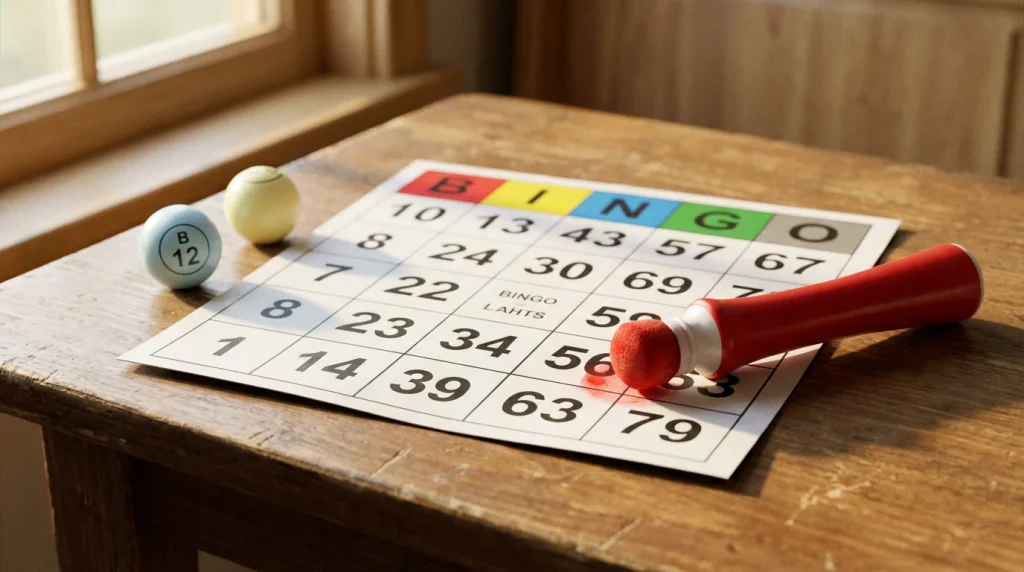
The Format That Sits Between Two Classics
Most UK bingo players can describe 90-ball in their sleep. A fair number have tried 75-ball and appreciate the pattern-based twist. But 80-ball bingo occupies a peculiar middle territory — familiar enough that the learning curve barely registers, yet different enough in pace and structure that it genuinely changes the session dynamic. It was purpose-built for online play, and that origin story tells you a lot about where you will and won’t find it.
Under a UKGC licence, 80-ball rooms are rare. The format never gained the cultural momentum of 90-ball in Britain, and most UK-regulated operators stock their lobbies with what fills seats fastest. Offshore platforms operate under different commercial logic. Curaçao- and MGA-licensed sites cater to an international player base, and 80-ball fits neatly into a lobby that already offers 75-ball for North American players and 90-ball for British ones (Gambling Commission). The result is that players on non-GamStop platforms are more likely to encounter 80-ball rooms than they would on any mainstream UK bingo site.
The format uses a 4×4 grid with 16 numbers per card, drawn from a pool of 80. Four colour-coded columns organise the numbers into distinct ranges, and winning patterns range from single-line completions to full-house blackouts. Games run faster than 90-ball but slower than 30-ball speed rounds, which positions 80-ball as a comfortable compromise for players who find 90-ball too drawn-out and speed bingo too abrupt.
This article breaks down the rules, explains how the colour-column system works, covers the most common winning patterns, and looks at where you can actually find 80-ball rooms on offshore platforms. If you have spent years playing 90-ball and want something that shifts the rhythm without abandoning the fundamentals, 80-ball is worth understanding before you buy your first card.
80-Ball Rules and the 4×4 Grid
The defining feature of 80-ball bingo is its card layout: a 4×4 grid containing 16 numbers, each drawn from a total pool of 80 balls. That is fewer numbers per card than 90-ball (which uses 15 numbers on a 3×9 grid but leaves many cells blank) and fewer than 75-ball (25 cells on a 5×5 grid with a free centre square). The 4×4 layout creates a compact, information-dense card where every cell matters. There are no blank spaces, no free squares — every number printed on your card needs to be called for a full-house win.
Numbers on the card are not randomly scattered. They are distributed across four columns, each assigned a colour and a specific number range. The first column typically covers 1-20, the second 21-40, the third 41-60, and the fourth 61-80. Different operators may assign different colours, but the structural principle is universal: each column draws from a distinct quarter of the number pool. This colour-coding serves a practical purpose during gameplay. When a number is called, you can immediately identify which column it belongs to before scanning for the exact cell, which speeds up the marking process considerably — especially when you are managing multiple cards.
A standard 80-ball game proceeds as follows. Players purchase one or more cards before the round begins. The caller (or RNG system, in online play) draws balls one at a time from the pool of 80. Numbers are auto-daubed on most online platforms, which removes the manual marking overhead. Prizes are awarded based on predetermined patterns, and the game typically ends once the highest-tier prize has been claimed.
Ticket prices on offshore platforms tend to mirror what you would expect from other formats: anywhere from 1p to £1 per card at lower-stakes tables, with premium rooms charging more. The number of players in a room directly affects both the prize pool and your probability of winning. Fewer players mean better individual odds but a smaller pot. More players inflate the jackpot but dilute your chances. That trade-off applies to every bingo variant, but in 80-ball the relatively fast game pace means rooms tend to cycle through rounds quickly, which keeps player counts dynamic throughout a session.
One detail that catches new players off guard: because the 4×4 grid has no blanks, the probability of completing a full house is structurally different from 90-ball. In 90-ball, your 15 active numbers sit on a card with 12 blank spaces, so only a fraction of called numbers ever apply to your card. In 80-ball, all 16 cells are live. That means a higher percentage of called numbers will match something on your grid, which creates a faster sense of progression — you are daubing more frequently, even if the total calls needed to complete a pattern remain comparable to other formats.
Top online casinos in the UK
- ChanzeBonus: Slots Welcome Bonus #1 200% up to €500 · Payout speed: 1-3 business days
- BeOnBetBonus: 100% up to €500 + 100 FS · Payout speed: 1-3 business days
- x3betBonus: Welcome Pack 100% Up to £1.000 + 200 Free Spins · Payout speed: 1-3 business days
- JetsetspinsBonus: 200% Bonus + 100 Free Spins + Free Royal Wheel · Payout speed: 1-3 business days
- WinBeastBonus: €5000 + 500 FS + €650 Freebet · Payout speed: 1-3 business days
- NightWinBonus: £900 + 400 free spins · Payout speed: 1-3 business days
- Revery PlayBonus: 100% up to€1,000+ 100 FS · Payout speed: 1-3 business days
- EvoSpinBonus: 125% up to €2500 + 125 Free Spins · Payout speed: 1-3 business days
Colour Columns and Winning Patterns
The colour-column system is not just a visual aid — it defines the pattern structure that determines how you win. In most 80-ball rooms, winning patterns are built around columns, rows, or specific shapes on the 4×4 grid. The simplest prize tier is typically a single column: all four numbers in one colour-coded column marked off. That is four numbers out of 80, which means column wins tend to occur relatively early in a game.
The next tier up is usually two columns or two rows, requiring eight numbers to be called from your card. Some rooms use diagonal patterns as a mid-tier prize — four numbers running from one corner of the grid to the opposite corner. The top prize is almost always the full house: all 16 numbers on your card daubed. Because every cell is active, a full house in 80-ball requires a higher proportion of your card to be completed than in 90-ball (where a full house means 15 out of 90 possible calls), but the smaller overall pool of balls means games still resolve within a reasonable number of calls.
Certain offshore platforms introduce custom patterns that go beyond the column-row-diagonal framework. You might see an “L” shape, a “T” shape, or a four-corner pattern where only the numbers at each corner of the grid need to be matched. Custom patterns add variety but also change the probability curve. A four-corner pattern requires just four specific numbers, but those four numbers must sit in fixed positions — there is no flexibility in which cells count. A single-column win also requires four numbers, but the column system gives you four possible columns to complete, which slightly improves your odds compared to a rigid positional pattern.
The interplay between pattern type and prize value is where the gameplay gets interesting. Rooms that offer a three-tier structure — single column, two columns, full house — create a pacing arc within each round. Early wins keep players engaged, mid-tier prizes sustain tension, and the full house delivers the climax. Offshore operators often sweeten the full-house prize with a call-count condition: complete all 16 numbers within a set number of calls (say, 50 or fewer) and win a bonus on top of the standard prize. This mechanic mirrors progressive jackpot triggers in 90-ball rooms and gives players a secondary target to watch during the game.
For players accustomed to 90-ball’s three fixed tiers — one line, two lines, full house — the pattern flexibility of 80-ball can feel both liberating and disorienting. There is no universal standard for which patterns a room will use, so it pays to check the specific rules each time you enter a new 80-ball lobby. The information is usually displayed in a rules tab or pattern guide within the room interface, and taking thirty seconds to read it before buying cards can save you from misunderstanding what you are actually playing for.
Finding 80-Ball Rooms at Offshore Sites
Here is the practical challenge: 80-ball bingo is not everywhere. Even on offshore platforms with large game libraries, the format occupies a niche. Most non-GamStop bingo sites lead with 90-ball and 75-ball rooms because those formats carry the highest name recognition and pull the largest player counts. 80-ball, when it appears, is often tucked into a secondary tab in the bingo lobby or bundled under a generic “other games” category. You may need to do some deliberate browsing to find it.
The availability of 80-ball depends heavily on which software provider powers the bingo lobby. Providers like Pragmatic Play and Caleta Gaming have developed 80-ball variants, but not every operator using their software chooses to activate the format. It is a configuration decision, not a technical limitation. If an offshore site runs on a platform that supports 80-ball but you cannot see any rooms, it is possible the operator simply has not enabled them — or has scheduled them to run at specific times rather than around the clock.
Scheduling matters more for 80-ball than for mainstream formats. Because the player base for 80-ball is smaller, operators often concentrate games into peak-hour sessions to ensure rooms fill adequately. A 90-ball room might run continuously with enough players at any hour, but an 80-ball room on the same site might only open during evening slots when traffic is highest. Some sites solve this by offering guaranteed prize pools for 80-ball games regardless of ticket sales, which provides a financial incentive for players to join even when room counts are low. Others run 80-ball as part of a rotating schedule, alternating it with speed bingo or Slingo rounds throughout the day.
Ticket prices in 80-ball rooms on offshore platforms generally fall in line with what you would pay for 90-ball or 75-ball games at the same site. The format does not carry a premium simply for being less common. If anything, operators sometimes price 80-ball tickets slightly lower to attract players who might otherwise default to the more familiar options. Prize pools depend on the room’s buy-in structure and player count, but you can expect the same general range as equivalent-stakes rooms in other formats.
One practical tip: if you want to play 80-ball regularly, look for offshore sites that explicitly list the format on their bingo lobby page or in their game guide. Sites that mention 80-ball in their marketing material are more likely to maintain consistent room availability than sites where you stumble across an occasional game buried three menus deep. Dedicated mention usually signals that the operator is actively promoting the format, which means better scheduling, higher participation, and more reliable prize pools.
The Middle Ground
Eighty-ball bingo does not try to be the fastest format or the most traditional one. It sits in between, and that positioning is both its strength and the reason it has never achieved mass popularity. Players who love the slow, social rhythm of 90-ball may find 80-ball a touch too brisk. Players who crave the sub-minute intensity of 30-ball speed rounds will find it too measured. But for a specific segment — players who want more engagement per round than 90-ball offers without sacrificing the strategic depth of multi-card play — 80-ball hits a genuine sweet spot.
The 4×4 grid is clean and easy to read. The colour-column system makes mental tracking faster than it would be on a 5×5 or 3×9 layout. The pattern variety keeps sessions from feeling repetitive, especially on platforms that rotate patterns between rounds rather than locking every game into the same column-row-blackout structure. And because every cell on the card is active, the pacing of each round feels tighter. You are daubing something almost every other call, which eliminates the dead stretches that can make 90-ball feel slow during mid-game.
The biggest obstacle to enjoying 80-ball is not the format itself but the supply problem. You need to find a platform that offers it, and then you need to find a room that is actually running when you want to play. Offshore sites give you a better chance than UKGC-licensed platforms, but even there, 80-ball is a secondary offering. Treat it as something you seek out intentionally rather than something that will appear in your default lobby rotation.
If you have never played 80-ball before, the adjustment from 90-ball takes about one round. The core mechanic — numbers called, numbers daubed, pattern completed — is identical. What changes is the geometry of the card and the speed at which patterns resolve. Buy a small number of cards for your first session, familiarise yourself with the column colour coding, and pay attention to which patterns the room is running before committing to a full multi-card buy. The format rewards a few minutes of upfront attention with a playing experience that feels noticeably different from what you are used to. Whether that difference suits your preferences is a question only a few rounds of actual play can answer.