
Live Bingo Not on GamStop
 Available in GB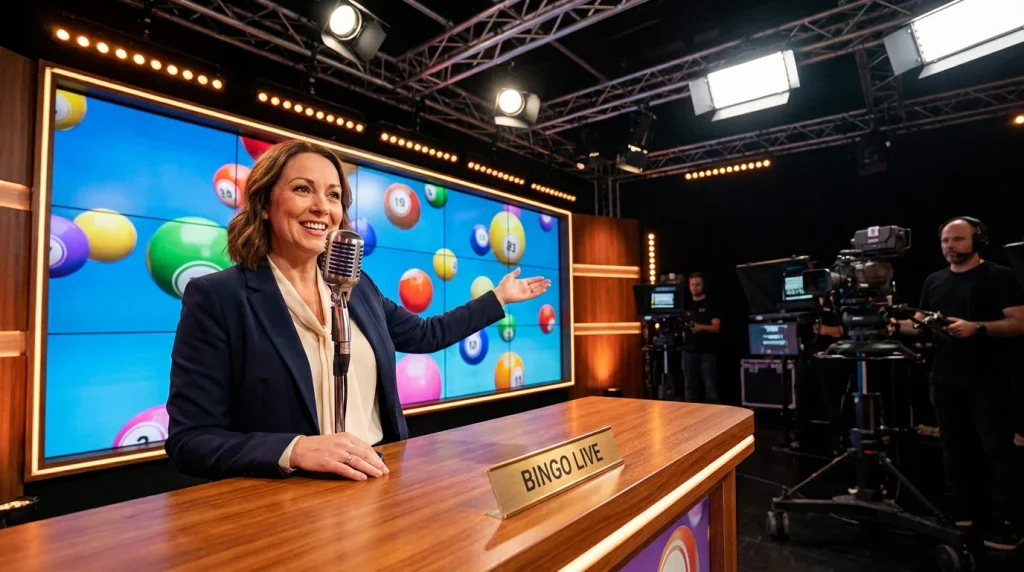
When the Caller Has a Voice
Live-hosted bingo adds a human element to a game that online platforms have spent two decades automating. Instead of a silent RNG cycling through numbers while auto-daub handles everything, a live host calls the numbers in real time — sometimes via video stream, sometimes via audio-only broadcast — and interacts with the chat room between calls. The balls are still drawn by software (the RNG doesn’t change), but the presentation wraps it in the social texture of a bingo hall: a voice, a personality, a running commentary that turns a series of random numbers into something closer to an event.
Non-GamStop bingo sites offer live-hosted rooms less consistently than UKGC-licensed platforms, where live bingo has become a significant differentiator. Offshore operators with larger networks and higher player volumes tend to run scheduled live sessions, while smaller sites may not offer the format at all. The reason is cost: a live host requires staffing, production infrastructure, and scheduling that automated rooms don’t. The investment only makes sense when the room fills enough seats to justify the overhead.
For players who find automated bingo too impersonal — where every session feels identical regardless of when or where you play — live-hosted rooms offer variety and engagement that the standard lobby can’t replicate. The game underneath is the same. The experience around it is meaningfully different.
How Live-Hosted Bingo Works
The technical setup for live bingo at offshore sites mirrors what UKGC-licensed platforms use. A host broadcasts from a studio (or occasionally from a home setup), calling numbers as they’re generated by the site’s RNG. The host’s audio or video feed is streamed to all players in the room alongside the standard game interface — your ticket grid, the number board, the prize display. The two layers run in parallel: the game engine handles the mechanics, and the host handles the atmosphere.
Numbers are called at a pace set by the host, which is typically slower than automated rooms. Where an automated 90-ball game might call a number every two to three seconds, a live-hosted game might space calls every four to six seconds, giving the host time to comment, interact with chat messages, and build anticipation around near-wins. This deliberate pacing is part of the format’s appeal — it recreates the rhythm of a bingo hall, where the caller’s cadence is as much part of the experience as the numbers themselves.
Chat interaction is where live bingo diverges most from automated play. The host reads and responds to messages from the chat room, acknowledges regulars, congratulates winners, and sometimes runs side games or trivia between rounds. Chat moderators (CMs) assist the host by managing the room, answering questions, and running chat-based promotions — small prizes or bonus credits awarded for specific messages, quizzes, or participation milestones. The chat layer transforms a passive watching experience into an interactive one, and the best hosts develop a following of regular players who attend their sessions specifically.
Auto-daub still operates during live games. You don’t need to manually mark your tickets — the software handles it regardless of whether the host is calling numbers or the game is running in automated mode. The live host doesn’t affect the mechanics of number drawing, ticket marking, or prize allocation. What changes is the presentation: the voice calling your numbers, the reaction when someone is one away from a full house, and the congratulations when the winner is announced. It’s the same game with a performance layer.
Video quality varies by platform. Some offshore sites stream live bingo in HD with professional studio lighting and branded sets. Others use simpler setups with lower production values. Audio-only live bingo — where the host calls numbers over a voice stream without a video feed — is less common but exists at platforms that want the live element without the production cost. The game functions identically in all cases; the difference is in how much of the host you see.
Top online casinos in the UK
- ChanzeBonus: Slots Welcome Bonus #1 200% up to €500 · Payout speed: 1-3 business days
- BeOnBetBonus: 100% up to €500 + 100 FS · Payout speed: 1-3 business days
- x3betBonus: Welcome Pack 100% Up to £1.000 + 200 Free Spins · Payout speed: 1-3 business days
- JetsetspinsBonus: 200% Bonus + 100 Free Spins + Free Royal Wheel · Payout speed: 1-3 business days
- WinBeastBonus: €5000 + 500 FS + €650 Freebet · Payout speed: 1-3 business days
- NightWinBonus: £900 + 400 free spins · Payout speed: 1-3 business days
- Revery PlayBonus: 100% up to€1,000+ 100 FS · Payout speed: 1-3 business days
- EvoSpinBonus: 125% up to €2500 + 125 Free Spins · Payout speed: 1-3 business days
Schedules and Themed Events
Live-hosted bingo runs on a schedule rather than continuously. Most offshore sites that offer the format run live sessions at specific times — typically evenings and weekends, when player traffic is highest. A common structure might include two or three live sessions per day, each lasting one to two hours, with automated rooms filling the remaining hours. The schedule is usually published in the lobby or on the site’s promotions page, and some platforms send notifications or email reminders before live sessions begin.
Themed events are the format’s secret weapon for retention. Holiday specials (Christmas bingo, Halloween bingo, Valentine’s Day events) feature themed hosts, custom chat games, and enhanced prize pools. Some offshore networks run weekly themed sessions — Friday night bingo with a party host, Sunday afternoon sessions with a more relaxed tone — that create recurring appointment viewing. The theme doesn’t affect the mechanics, but it gives each session a distinct identity that automated rooms lack.
Prize pools during live events are typically larger than in standard automated rooms. Operators invest in live sessions as promotional events, supplementing the ticket-generated prize pool with guaranteed minimum prizes or bonus jackpots. A live room that generates £50 in ticket sales might advertise a £100 guaranteed prize, with the operator covering the shortfall. This guaranteed minimum attracts more players, which in turn makes the room busier and the chat more active — a self-reinforcing cycle that benefits the format.
The scheduling constraint means you can’t play live bingo on demand. If the live session starts at 8 PM and you’re free at 6 PM, you wait or play automated rooms in the interim. This limitation is also part of the appeal: the fixed schedule creates a sense of occasion that 24/7 availability doesn’t. Showing up for a live session feels like attending something, rather than just opening an app.
Chat and Community Features
The chat room in live bingo sessions serves a different function than in automated rooms. In automated play, chat is an optional sidebar — most players ignore it. In live-hosted games, chat is integral to the experience. The host references it constantly, calls out player names, responds to comments, and incorporates the room’s energy into their delivery. Players who participate in chat are part of the show. Players who don’t still benefit from the atmosphere it creates.
Chat games run alongside the bingo rounds and award small prizes — typically bonus credit or free tickets for future sessions. Common chat games include trivia questions, word association, first-to-type challenges, and bingo-themed quizzes. The prizes are negligible in monetary terms (10p to £1 per win) but serve as engagement tools that keep the room active between rounds. For regular players, the accumulation of chat prizes across a session can offset a portion of their ticket spend.
Community development is where live bingo shows its strongest advantage over automated formats. Regular live sessions build a recognisable cast of players and hosts. Nicknames become familiar. In-jokes develop. Returning to the same live room on the same night each week starts to feel like visiting a local — not in the sentimentalised way marketing copy describes it, but in the genuinely mundane way that regularity breeds familiarity. Offshore sites that invest in live bingo retain players at higher rates than those that rely entirely on automated rooms, because the community element creates switching costs that bonuses alone can’t replicate.
The quality of the chat community varies by room size. Smaller live sessions with 20 to 50 active chatters tend to produce the most engaged communities, because the host can interact with individual players and the conversation isn’t drowned in spam. Larger sessions with hundreds of participants are noisier, more chaotic, and harder for the host to manage personally. Both have their appeal, but if community is your primary motivation for playing live bingo, look for the mid-sized rooms where your username won’t disappear in a stream of messages.
Real Voices, Real Numbers
Live bingo at offshore sites isn’t a fundamentally different game. The RNG is the same. The prize structures are the same. The odds per ticket are the same. What changes is how the game feels while you’re playing it — and for a format built around community and shared experience, how it feels matters more than the mechanics might suggest.
The limitation of live bingo on non-GamStop platforms is availability. Not every offshore site offers it, the sessions run on fixed schedules, and the production quality ranges from professional to rudimentary. Finding a live bingo room that suits your schedule, your preferred host style, and your ticket budget may take some trial across multiple platforms. But when the match is right — a host who keeps the room engaged, a chat community that feels welcoming, a prize pool that justifies the session — live bingo delivers something that automated rooms cannot. The numbers are random. The experience isn’t.