
Mobile Bingo Not on GamStop
 Available in GB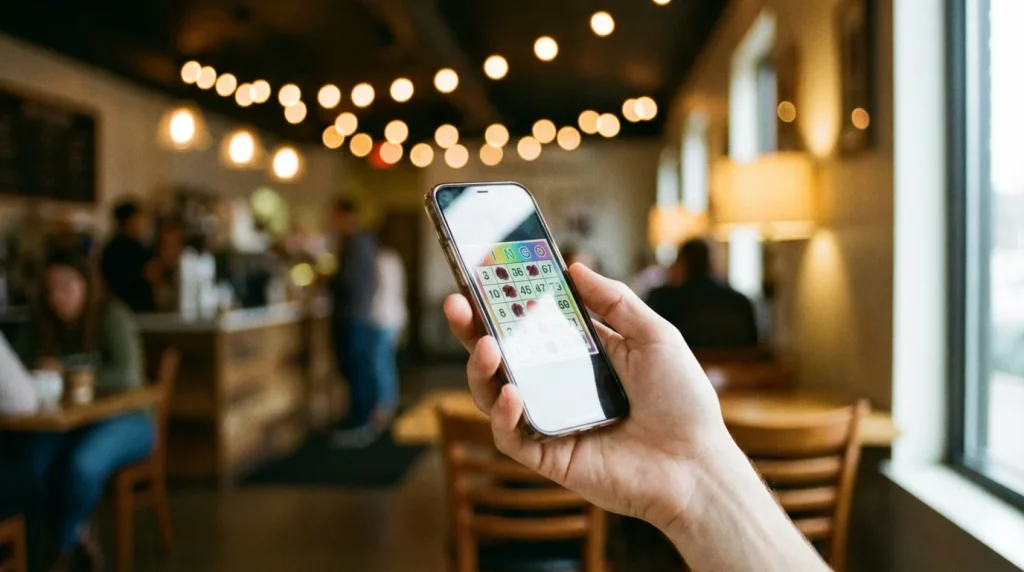
Bingo Moved to Your Phone Years Ago
The majority of online bingo sessions in the UK now happen on mobile devices. That shift occurred years ago, and offshore platforms not on GamStop followed the same trajectory as UKGC-licensed sites: mobile-first design, responsive layouts, and game engines optimised for touchscreens. If you’re playing bingo at a non-GamStop site in 2026, you’re almost certainly doing it from a phone or tablet, and the platform is almost certainly built to accommodate that.
The mobile experience at offshore bingo sites ranges from excellent to adequate, depending on the software provider powering the platform. Sites built on Dragonfish, Pragmatic Play, or similar established frameworks tend to deliver smooth, reliable mobile play with full lobby access, real-time chat, and seamless cashier integration. Sites running custom or lesser-known software can be less polished — slower load times, clunkier navigation, and occasional formatting issues on smaller screens. The variance is wider than at UKGC-licensed platforms, where minimum technical standards are enforced by the regulator.
What hasn’t changed between desktop and mobile is the game itself. Automatic number marking, ticket purchasing, room selection, prize structures — all identical regardless of device. The only functional difference is the interface you use to access them, and on well-built platforms that interface is indistinguishable from a native app. On poorly built ones, the difference is immediately apparent.
Top online casinos in the UK
- ChanzeBonus: Slots Welcome Bonus #1 200% up to €500 · Payout speed: 1-3 business days
- BeOnBetBonus: 100% up to €500 + 100 FS · Payout speed: 1-3 business days
- x3betBonus: Welcome Pack 100% Up to £1.000 + 200 Free Spins · Payout speed: 1-3 business days
- JetsetspinsBonus: 200% Bonus + 100 Free Spins + Free Royal Wheel · Payout speed: 1-3 business days
- WinBeastBonus: €5000 + 500 FS + €650 Freebet · Payout speed: 1-3 business days
- NightWinBonus: £900 + 400 free spins · Payout speed: 1-3 business days
- Revery PlayBonus: 100% up to€1,000+ 100 FS · Payout speed: 1-3 business days
- EvoSpinBonus: 125% up to €2500 + 125 Free Spins · Payout speed: 1-3 business days
Mobile-Optimised Sites vs Dedicated Apps
Offshore bingo sites reach your phone through two routes: a mobile-optimised website accessed via your browser, or a dedicated app downloaded to your device. The vast majority of non-GamStop platforms use the first approach. You open Safari, Chrome, or any mobile browser, navigate to the site, log in, and play. The site detects your screen size and adjusts its layout accordingly. No download, no installation, no storage space consumed.
The browser-based approach dominates the offshore market for a practical reason: Apple and Google restrict real-money gambling apps on their stores. The App Store and Google Play require developers to hold a gambling licence recognised in the user’s jurisdiction, and most Curacao-licensed operators don’t meet that bar for UK users. Some offshore bingo sites offer APK downloads for Android (bypassing Google Play entirely), but this requires the user to enable installation from unknown sources — a step that introduces its own security considerations.
A handful of MGA-licensed non-GamStop platforms do maintain legitimate apps on one or both stores, because the MGA licence is more widely accepted by Apple and Google’s compliance teams. These apps tend to offer slightly better performance than browser-based access: faster load times, push notifications for promotions and game schedules, and smoother transitions between lobby, game, and cashier. Whether the improvement justifies the storage footprint is marginal — a well-optimised mobile site performs nearly as well.
For most players at non-GamStop bingo sites, the browser is the access point. Add the site to your home screen for one-tap access, and the experience is functionally equivalent to an app without the download. If the site offers an app and you’re comfortable with the source, it’s a convenience upgrade. If it doesn’t, you’re not missing a materially different experience.
Performance and Usability
Performance on mobile depends on three variables: your device, your connection, and the site’s technical optimisation. Modern smartphones — anything released in the last four years — handle bingo software without difficulty. The games are not graphically demanding; a bingo room is essentially a number grid with a chat panel and a timer. The processing requirements are minimal compared to 3D slots or live dealer streams. If your phone can run social media apps without lag, it can run mobile bingo.
Connection quality matters more than device capability. Bingo games run in real time, with numbers called at fixed intervals and prize claims resolved instantly. A stable 4G or Wi-Fi connection is sufficient. Intermittent connectivity — the kind you experience on the Underground or in rural areas with patchy signal — can cause missed calls, delayed daubs, or disconnection from a room mid-game. Auto-daub protects you from missing numbers during brief drop-outs, since the server marks your ticket regardless of whether your device received the call in real time. But prolonged disconnection can result in missed game entries or, in rare cases, forfeited tickets.
Usability is where the gap between providers becomes visible. Well-built mobile bingo interfaces present the ticket grid prominently, with clear number visibility even on smaller screens. The chat panel is collapsible. The buy-ticket flow requires two taps at most. Room switching is intuitive. Poorly optimised sites cram desktop-designed interfaces into mobile viewports, resulting in tiny text, overlapping elements, and a cashier page that requires zooming and scrolling to complete a deposit. Test the mobile experience during your evaluation phase — if the lobby is frustrating to navigate on your phone, the rest of your sessions won’t improve.
Battery consumption during extended bingo sessions is modest but not negligible. Expect a well-optimised mobile bingo site to consume roughly the same power as streaming music with the screen on — significantly less than video streaming but enough to notice during a two-hour session. If you’re playing on a commute or away from a charger, keep an eye on battery level. A phone that dies mid-game isn’t an immediate problem (auto-daub continues server-side), but it prevents you from purchasing tickets for subsequent rounds.
Payment Methods on Mobile
Every deposit and withdrawal method available on desktop should be accessible on mobile. In practice, most offshore bingo sites mirror their full cashier functionality across devices. Card deposits, e-wallet payments, crypto transfers, and pay-by-phone options all work through the mobile browser or app interface. The forms are the same — card number, amount, confirmation — just formatted for a smaller screen.
Pay-by-phone deserves specific mention in the mobile context. This method lets you charge bingo deposits directly to your mobile phone bill or deduct them from prepaid credit. It’s exclusively a mobile-native payment option and is available at some non-GamStop bingo sites through providers like Boku or Payforit. Deposits are typically capped at £30 per day, and the method is deposit-only — you can’t withdraw to your phone bill. The appeal is immediacy: no card details entered, no e-wallet login required, just a confirmation on your phone. The limitation is the daily cap and the inability to withdraw through the same channel.
Biometric authentication adds a layer of convenience on mobile. Sites and e-wallets that support fingerprint or face recognition let you authorise deposits without manually entering passwords or PINs. Apple Pay and Google Pay integration is rare at offshore bingo sites — most processors don’t support it — but e-wallet apps like Skrill and Neteller offer biometric login on mobile, which speeds up the payment flow for players who deposit through those services.
One practical consideration: if you’re depositing crypto on mobile, make sure your wallet app is on the same device. Scanning the bingo site’s QR code from the same phone you’re playing on requires switching between browser and wallet app, which is slightly less convenient than scanning from a second device. Some mobile wallets support copy-paste of deposit addresses, which bypasses the QR issue entirely.
Bingo in Your Pocket
Mobile bingo at non-GamStop sites is the default experience for most players, and the platforms have built for that reality. The rooms work. The payments process. The auto-daub runs whether your screen is active or not. What mobile doesn’t change is the fundamental decision-making around which site to play at, how much to deposit, and when to stop — those choices travel with you regardless of device.
The convenience of mobile play introduces one risk worth naming: accessibility leads to frequency. A bingo site on your home screen is available during every idle moment — commute, lunch break, waiting room, bed. The same session you’d play once at a desktop can become three or four smaller sessions scattered through the day, each feeling insignificant but accumulating into more time and money spent than a single sitting would have produced. Set session reminders if your platform offers them, or set your own. The phone doesn’t know when to stop. That part is still your job.