
75-Ball Bingo Without GamStop
 Available in GB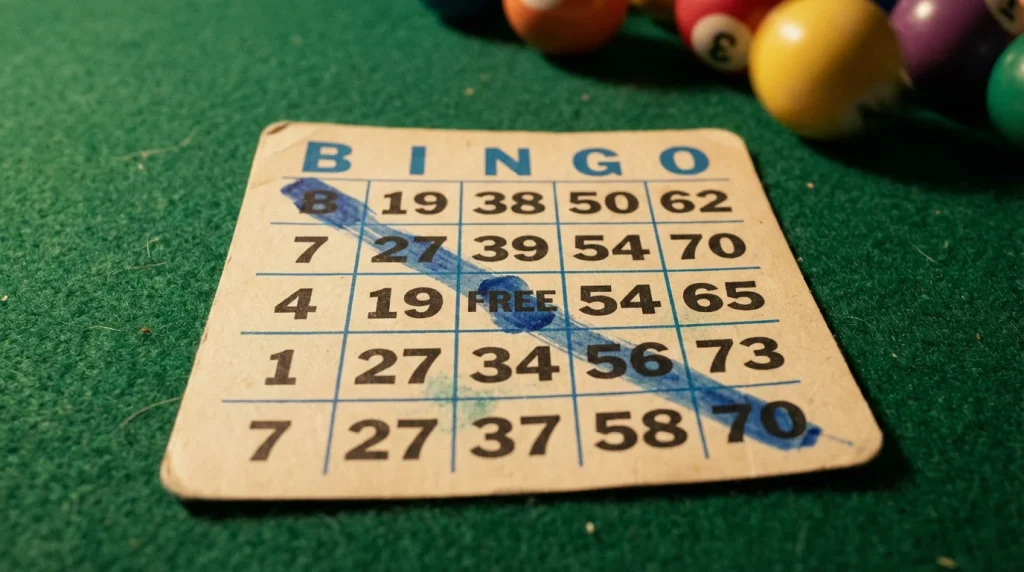
Pattern Bingo Finds a New Home Offshore
Seventy-five-ball bingo crossed the Atlantic digitally — and stuck. The format originated in American bingo halls, where the 5×5 grid and pattern-based wins became the default decades before online gambling existed. When UK operators began building bingo platforms in the early 2000s, they imported 75-ball alongside the domestic 90-ball standard. It never overtook the home-grown variant in popularity, but it carved out a loyal following among players who preferred the faster pace and visual variety of pattern play.
On UKGC-licensed platforms, 75-ball rooms have always been the second option — available but rarely the headline attraction. Offshore sites operate differently. Many platforms licensed in Curaçao or under the MGA pull their software from the same global providers that supply the American market, where 75-ball is the primary format. The result is a wider selection of 75-ball rooms, more pattern variety, and in some cases dedicated lobbies that treat the format as a main event rather than an afterthought.
For UK players on GamStop looking for pattern bingo, offshore platforms aren’t just the available option — they’re often the better-stocked one. The rules below explain exactly how the format works, what determines your odds, and where the rooms run.
Rules, Grid Layout and Winning Patterns
The free space gives you a head start — the pattern determines how far you need to go. A 75-ball bingo ticket is a 5×5 grid containing 24 numbers and one free space in the centre. Each column is labelled with a letter from B-I-N-G-O and holds numbers from a specific range: B covers 1–15, I covers 16–30, N covers 31–45 (with the free space replacing one number), G covers 46–60, and O covers 61–75. A caller draws from a pool of 75 numbered balls, and players daub matching numbers on their card.
Unlike 90-ball bingo, where prizes follow a fixed progression of one line, two lines, and full house, 75-ball games are defined by patterns. The winning condition is completing a specific shape or arrangement on the grid. Standard patterns include a single horizontal, vertical, or diagonal line, but the format’s real character comes from its more elaborate designs: letters (L, T, X, Z), shapes (diamond, cross, frame, four corners), and custom patterns that change from game to game.
The pattern is announced before each round begins and displayed visually on screen so players can track their progress. Some rooms rotate through a set of standard patterns, while others feature themed sessions where every game uses a different custom design. Blackout — filling the entire card with all 24 numbers plus the free space — is the most difficult pattern and usually carries the largest prize. It functions as the 75-ball equivalent of a full house, though it requires significantly more calls to complete.
Auto-daub handles the marking, just as in 90-ball. The software highlights matching numbers and shows your progress toward the active pattern in real time. Most platforms also display how many numbers you need to complete the pattern, which creates a visual countdown that adds tension as the game progresses. When a player completes the pattern, the round ends immediately.
Ticket prices at offshore 75-ball rooms follow similar ranges to 90-ball — anywhere from 1p to £1 per card at standard rooms, with higher-stakes rooms available. You can typically buy multiple cards per game, and bulk discounts are common. The free space counts as automatically daubed from the start of every game, which means every player begins with one cell already filled regardless of the pattern in play.
One structural difference worth noting: because patterns vary in complexity, the number of calls needed to produce a winner fluctuates more in 75-ball than in 90-ball. A simple four-corners pattern might resolve in under 30 calls. A blackout could take 60 or more. This variability affects both game duration and the feel of each round — simpler patterns create quick, snappy games, while complex ones build slowly.
How Patterns Affect Your Winning Odds
A single-line pattern completes in roughly half the calls of a blackout — the odds reflect that. The probability of winning in any given 75-ball game depends on three variables: the pattern complexity, the number of cards in play, and how many cards you hold. You can’t influence the first variable (it’s set by the room), but understanding how pattern complexity affects probability helps you choose rooms and manage expectations.
Simple patterns require fewer specific numbers to complete. A single horizontal line needs five numbers (four plus the free space if the line crosses the centre column). A diagonal line also needs four or five. At the other extreme, a blackout demands all 24 unique numbers on your card. The fewer numbers required, the earlier in the draw a winner is likely to emerge, and the more evenly distributed the winning probability is across all cards in the room. Complex patterns concentrate wins later in the draw, when fewer cards remain competitive — but the overall probability per card remains a function of total cards in play.
The maths simplifies to this: your chance of winning equals the number of cards you hold divided by the total cards in the room. If 400 cards are in circulation and you hold 20, your win probability is 5% regardless of the pattern. What the pattern changes is when the win occurs and how much suspense the game generates. Simple patterns resolve faster with smaller prize pools (because games are shorter and fewer tickets accumulate). Complex patterns build larger pools and take longer to resolve, but your per-card probability remains the same ratio.
Where pattern choice starts to matter strategically is in rooms that offer variable prizes based on the number of calls. Some offshore 75-ball rooms pay a premium if the pattern is completed within a set number of calls — for instance, a jackpot that triggers if blackout is achieved in under 48 calls. These conditional prizes introduce a second layer of probability: not just whether you win, but whether the game resolves quickly enough to qualify for the bonus. The probability of a 48-call blackout is extremely low (the exact figure depends on the number of cards and the random draw), which is why these jackpots can accumulate to substantial amounts.
For practical purposes, the takeaway is straightforward. Pattern complexity doesn’t change your fundamental odds against other players in the room. It changes the pace, the feel, and the prize structure of the game. If you prefer frequent small wins, look for rooms running simple patterns. If you prefer larger, less frequent payouts, seek out blackout and complex pattern games. Neither approach has a mathematical edge over the other — they’re different experiences of the same underlying probability.
Where Patterns Lead
Every pattern is a puzzle the caller solves for you — pick the one that fits your patience. The appeal of 75-ball bingo has always been its visual quality. Where 90-ball rewards a linear progression from one line to full house, 75-ball asks you to watch a shape emerge from scattered numbers. There’s something satisfying about seeing an X form on your card or a diamond close with one final corner, even when auto-daub is doing the actual work.
That visual element is also what keeps the format fresh across sessions. A 90-ball game feels essentially the same every round — the prize tiers don’t change, the card layout doesn’t change, and the progression is always line, two lines, house. Seventy-five-ball rooms that rotate patterns offer genuine variety from one game to the next. The numbers are still random, the probability is still fixed, but the shape of the win changes, and that’s enough to alter the experience.
Offshore platforms have leaned into this. Several providers now offer custom pattern libraries with dozens of designs, seasonal themes, and even player-suggested patterns in community-driven rooms. It’s a small touch, but it reflects the format’s strength: 75-ball bingo is the variant that most rewards visual engagement, even in a game where every outcome is determined by chance. The pattern on your card won’t change the odds. It will change whether you’re still paying attention when the winning number drops.
Finding 75-Ball Rooms at Offshore Sites
Not every offshore lobby stocks 75-ball — but the ones that do usually run rooms around the clock. The format’s availability depends primarily on the software provider powering the platform. Providers with roots in the North American market tend to include 75-ball as a core offering, while those built primarily for the European market may treat it as a secondary addition. Before registering at any offshore bingo site, check the lobby for active 75-ball rooms and note whether they’re running continuously or on a fixed schedule.
Scheduling matters because player density drives prize pools. A 75-ball room that runs 24/7 may have thin attendance during off-peak hours, which means smaller pots but better individual odds. Rooms that operate on a timetable — say, every two hours or during designated evening sessions — tend to concentrate players and generate larger pools. Neither model is objectively better; it depends on whether you prioritise bigger prizes or better odds per card.
Look for platforms that separate their 75-ball rooms by ticket price and pattern complexity. A well-organised lobby lets you filter by stake level and game type, so you can find low-cost simple-pattern rooms for casual sessions or high-stakes blackout games when you want to play with more at stake. Sites that lump all 75-ball games into a single room with no filtering are either under-resourced or not treating the format seriously — both signals worth noting.
Finally, confirm that the platform displays pattern previews before each game and shows real-time progress on your cards. These are standard features on quality bingo software, but not universal. Playing 75-ball without a clear pattern display defeats the format’s core appeal — the shape-watching experience that sets it apart from every other variant.